Hand-Washing and Spot-Cleaning Pillows That Cannot Go in a Machine
The full hand-wash method, plus the step most guides rush: rinsing until the water runs clear, which is what stops residue smells.

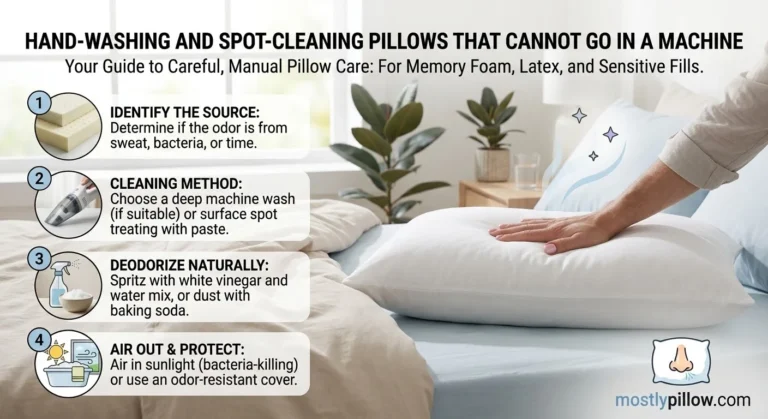
The full hand-wash method, plus the step most guides rush: rinsing until the water runs clear, which is what stops residue smells.
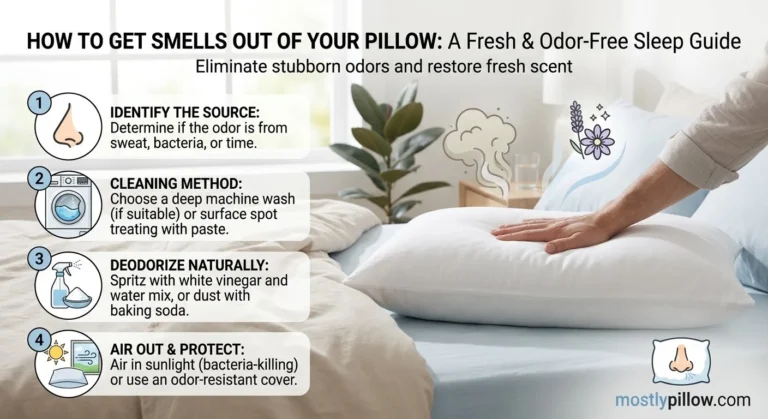
Work out what kind of smell it is first. Body odor, new-foam off-gassing and musty damp are three problems with three different fixes.

A safety check before you start, then four methods ranked by escalation, plus an honest note on how much yellowing actually comes out.
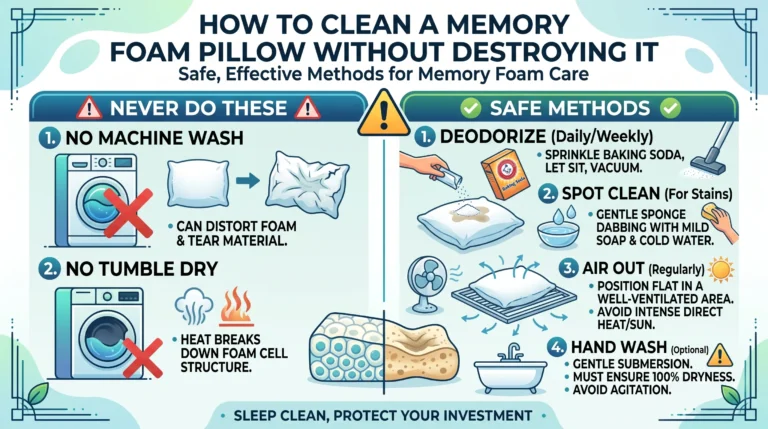
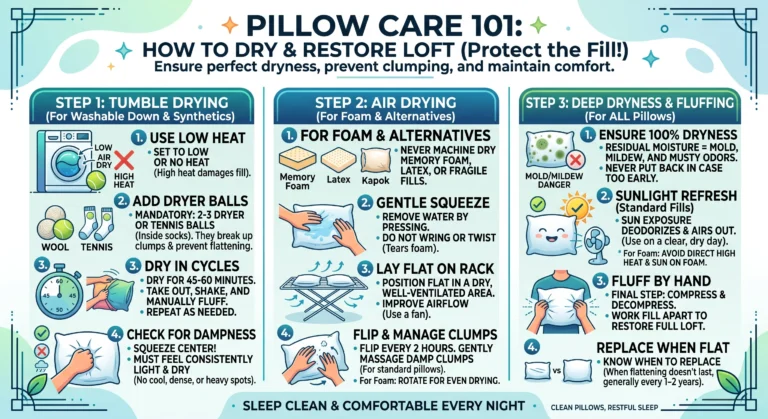
Why the machine is out, the three cleaning methods ranked by how dirty the pillow really is, and how to tell when foam is genuinely dry.
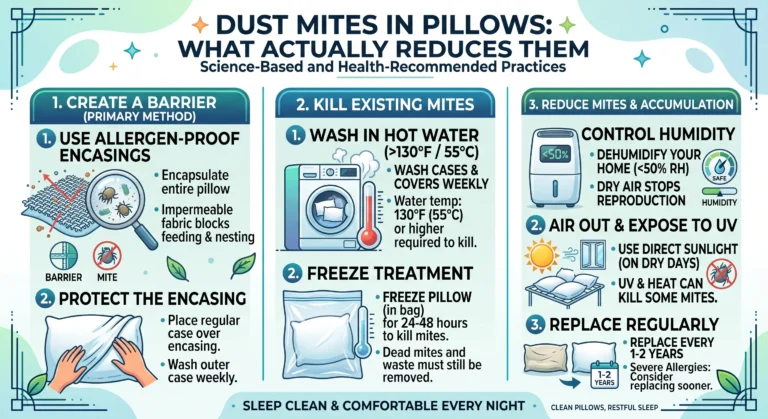
What the AAFA and ACAAI actually recommend for pillows, why hot washing clashes with many care labels, and which common fixes aren’t in that guidance.
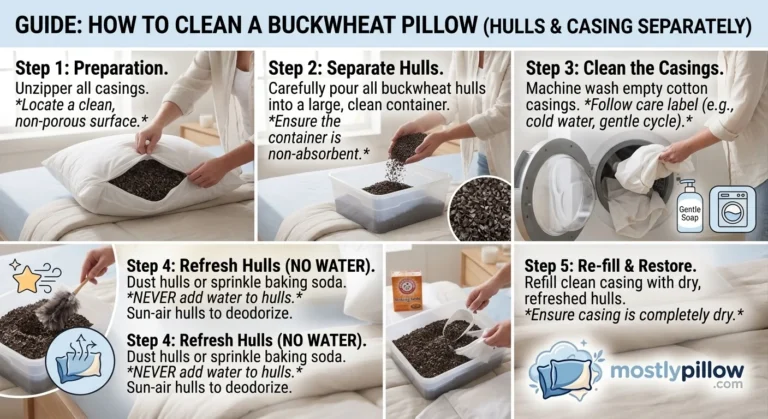
A buckwheat pillow is two objects with two different care routines. The hulls never get wet. Here is how each part is actually handled.
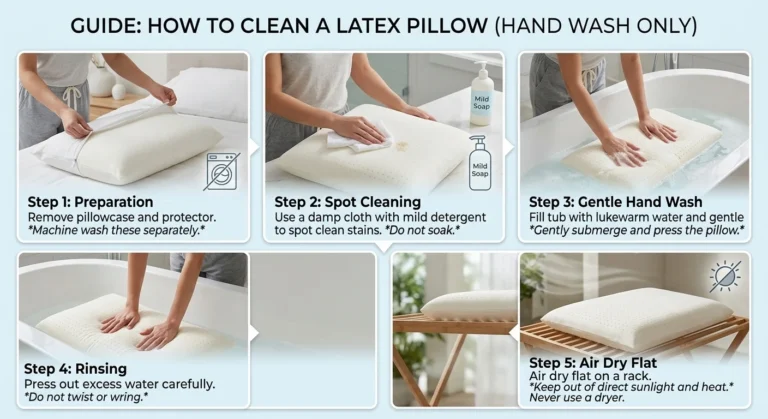
The rules for latex and the reason behind each one, including why wet latex tears and why direct sunlight is the one to take seriously.
What the yellow actually is, why it lands where it does, and which causes you can change tonight versus the ones you cannot.
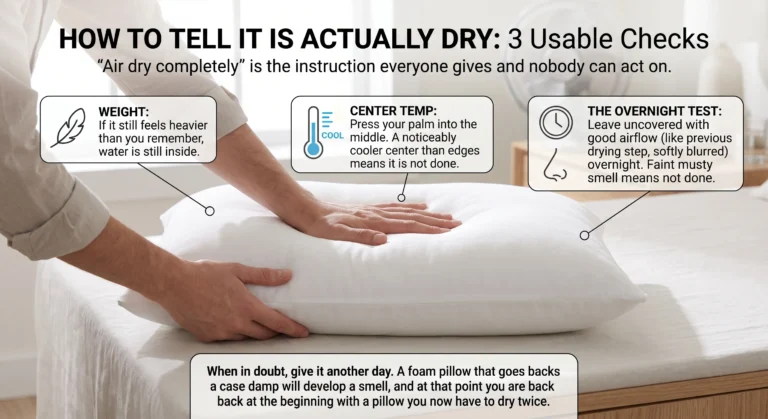
The dryness test that actually works, a realistic time estimate, and the three failure modes that ruin more pillows than washing ever does.
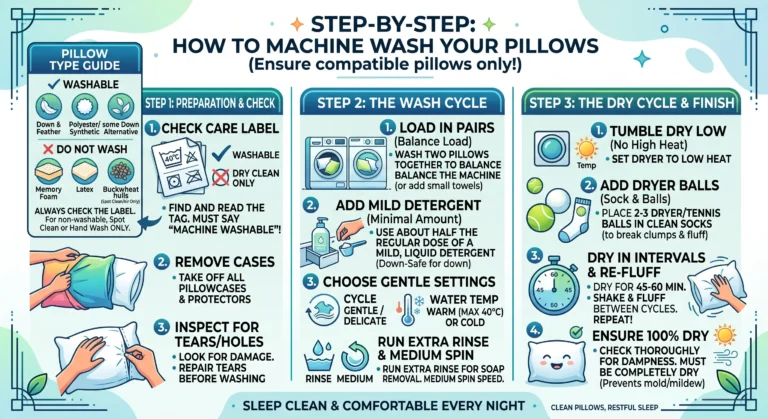
Which pillows can go in the machine, what to do if the care label is gone, and the exact cycle, temperature and rinse settings that keep them intact.