How to Dry Pillows Without Ruining the Fill
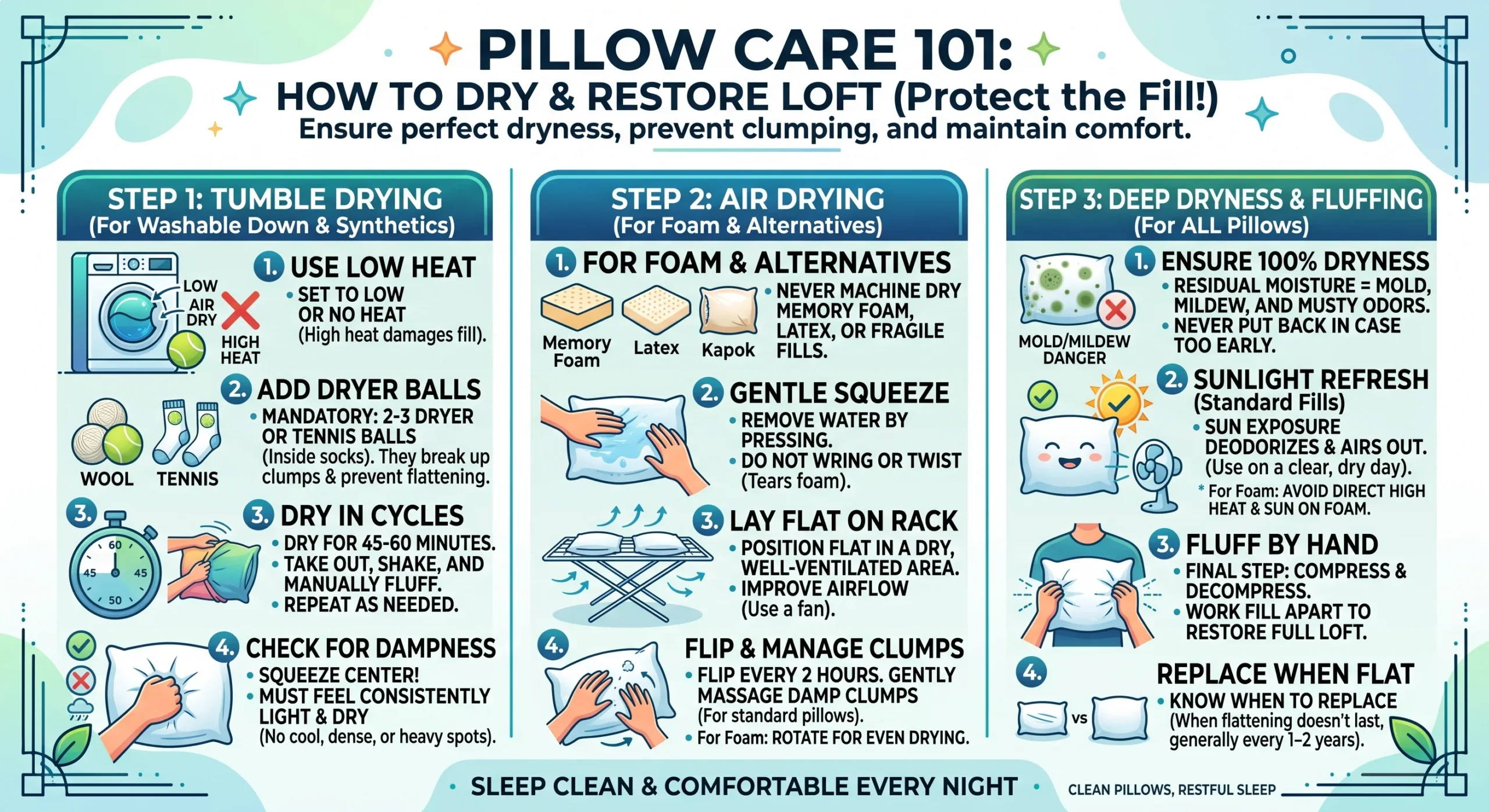
Dry pillows on a no-heat or air-dry setting. Heat can alter or damage the fill, especially synthetic and foam materials. Add wool dryer balls or clean tennis balls to break up clumps and move air through the pillow. Expect it to take much longer than a normal load, and check the center rather than the surface: a pillow that feels dry on the outside is often still wet at the core. Trapped core moisture is the usual reason a freshly washed pillow smells musty a day later.
The rule: no heat, and why
A no-heat or air-dry cycle is the safer default once a pillow comes out of the wash. Heated cycles can alter or possibly damage the filling, particularly in synthetic and foam materials, and that damage does not reverse afterward. If your dryer only offers a low-heat option rather than a true no-heat setting, low heat is the more cautious choice, but air-drying is still the safest route for any fill you are unsure about, and it is the only reasonable option for a pillow that should not have gone in the wash cycle heavily saturated in the first place.
What goes wrong when you get drying wrong (the three failure modes)
Three distinct failures account for most ruined pillows after washing. Heat damage affects foam and synthetic fills, which can lose shape or degrade under high dryer heat. Clumping affects down and fiberfill, where the loose fill bunches together instead of redistributing evenly through the tumbling action. Trapped core moisture affects any thick pillow, but especially feather fills, where the center stays damp long after the outside feels dry, which is what actually leads to a musty smell or mildew days later. Recognizing which of these you are dealing with tells you what to fix.
Dryer method, step by step
Set the dryer to a no-heat or air-fluff cycle if your machine has one, or the lowest heat setting available otherwise. Add two or three wool dryer balls, or a few clean tennis balls, to help break up clumping and keep air moving through the fill. Dry one or two pillows at a time rather than overloading the dryer, since crowding reduces airflow and extends drying time even further. Pause partway through and reshape or fluff the pillow by hand; this helps redistribute fill that may be clumping in one spot.
Dryer balls and tennis balls: what they actually do
Wool dryer balls and clean tennis balls work by physically bouncing against the pillow as it tumbles, which breaks up clumps in the fill and keeps air channels open through the material so moisture can actually escape rather than getting trapped. They speed drying and reduce clumping, but they do not substitute for a full drying cycle. A pillow that still fails the dryness test below needs more time, not more balls.
How long it really takes (honest range, not a single number)
No-heat drying takes considerably longer than a normal laundry load, often several hours rather than the typical single dryer cycle, and the exact time depends heavily on the specific machine, the fill type, and how saturated the pillow was going in. “Still slightly damp” after the first cycle is a common, normal finishing state rather than a sign something went wrong; it usually just means the pillow needs another round rather than being pulled out and used anyway.
The dryness test: how to know it is finished (the core check)
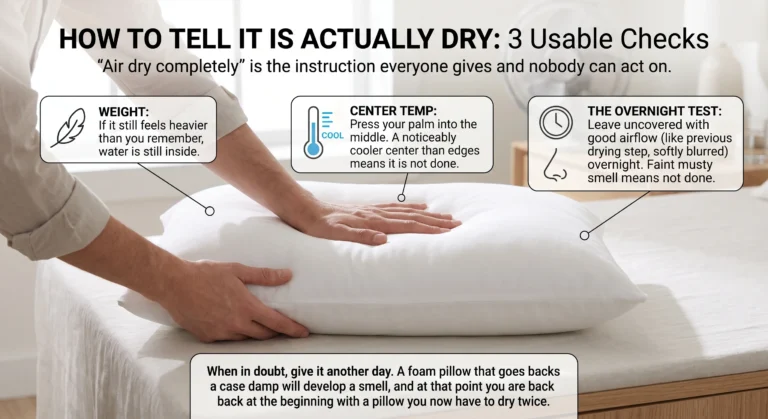
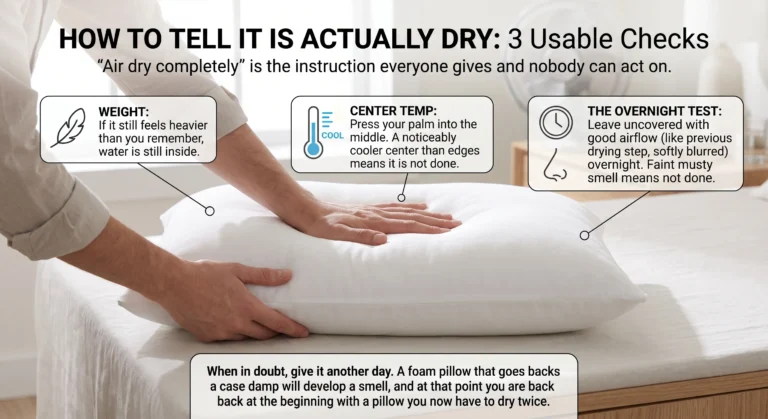
Fill insulates, so the outside of a pillow reaches touch-dry well before the center does, and that gap explains most post-wash pillow failures: the musty smell, the mildew, and the assumption that a pillow is ruined when it is actually just still wet inside. Press the center of the pillow firmly between both hands and feel for coolness or extra weight compared to the edges; a core that still feels cool or heavy relative to the outer edges is not finished. Check near the seams too for any lingering damp smell. Do not put a pillow back into use, or into storage, until it passes this check.
Air-drying without a dryer
Lay the pillow flat rather than hanging it by one corner while still heavy with water, since hanging concentrates the wet fill’s weight at a single point and can distort the shape permanently. Turn it over periodically so both sides get even air exposure, and choose a well-ventilated spot. This takes longer than dryer-assisted drying but is the required method for fills that should never go in a dryer at all, and a reasonable option for anyone who does not have one.
Drying by fill type
| Fill type | Dryer-safe | Best method |
|---|---|---|
| Down / feather | Yes | No-heat tumble with dryer balls; takes longer than synthetic fills |
| Polyester / fiberfill | Yes | No-heat or low-heat tumble cycle |
| Memory foam | No | Air-dry only, never a dryer or washing machine |
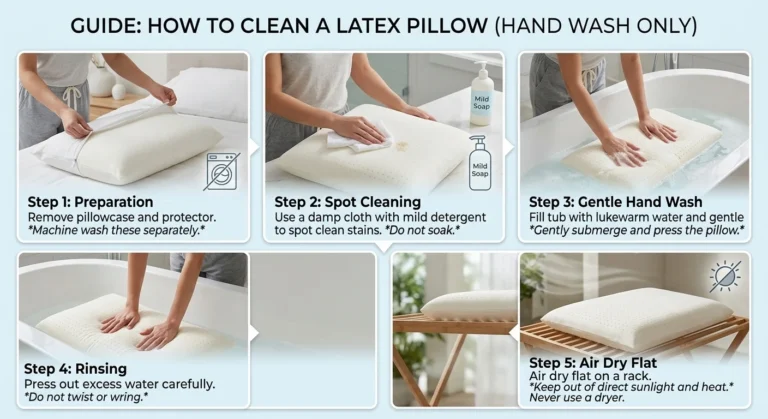
| Latex | No | Air-dry only, never a dryer or washing machine |
| Buckwheat (hulls) | No | Air out separately from the casing; no heat method |
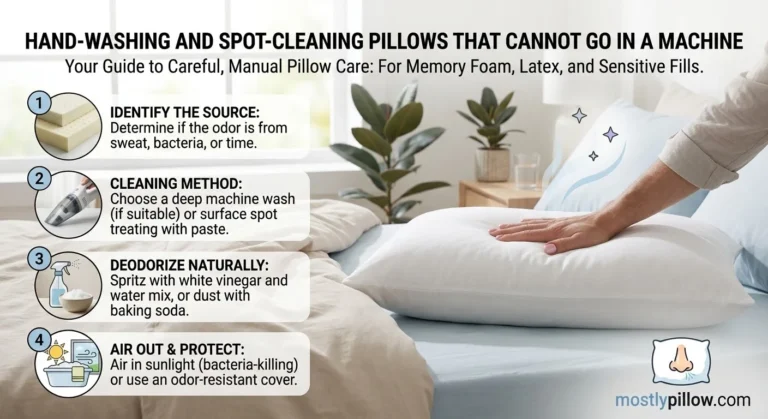
If you have memory foam or latex, see How to Wash Pillows in a Washing Machine for the non-machine approach those materials actually need instead of drying advice built for washable fills.
Direct sunlight can help pillows dry and freshen, particularly down and feather, though it is worth noting the honest trade-off that strong, prolonged sun exposure can degrade some fabrics over time, so treat it as a supporting method rather than the primary one.
It still smells. Now what?
If a pillow has been thoroughly dried, passed the core check, and still carries an odor, that points toward a smell that set in before washing rather than a drying failure. That is a related but separate problem from drying, and the wider odor and stain picture is covered in Pillow Care 101, along with how the yellowing that often shows up alongside odor is treated in How to Get Yellow Stains Out of Pillows. If drying keeps taking unusually long or the smell keeps returning, it is worth reconsidering how often the pillow is being washed in the first place; see How Often Should You Actually Wash Your Pillows?
FAQ
How do I know if my pillow is actually dry, not just dry on the surface?
Press the center firmly between both hands and compare it to the edges. If the center feels cool, heavy or damp compared to the outer edges, it needs more drying time, even if the outside already feels dry.
Why does my pillow smell musty the day after I washed it?
This is almost always trapped moisture at the core that was not fully dried out, which allows mildew or bacteria to develop, especially in feather fills. It is a drying issue, not a sign the wash itself failed.
Can I use heat to speed up drying a pillow?
It is not recommended for most fills. Heat can alter or damage filling, particularly synthetic and foam materials. A no-heat or low-heat setting, combined with dryer balls and extra time, is the safer approach.
Do I need dryer balls or tennis balls to dry a pillow properly?
They help significantly by breaking up clumps and improving airflow through the fill, but they are not strictly required. Without them, expect more manual fluffing and reshaping partway through the cycle.
Can memory foam pillows go in the dryer at all?
No. Memory foam should never go in a dryer or a washing machine. It needs a different, non-machine cleaning and drying approach entirely.