How to Wash Pillows in a Washing Machine (Step by Step)
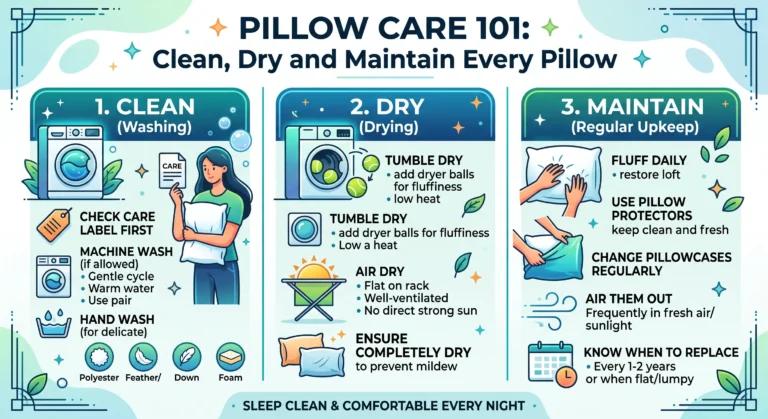
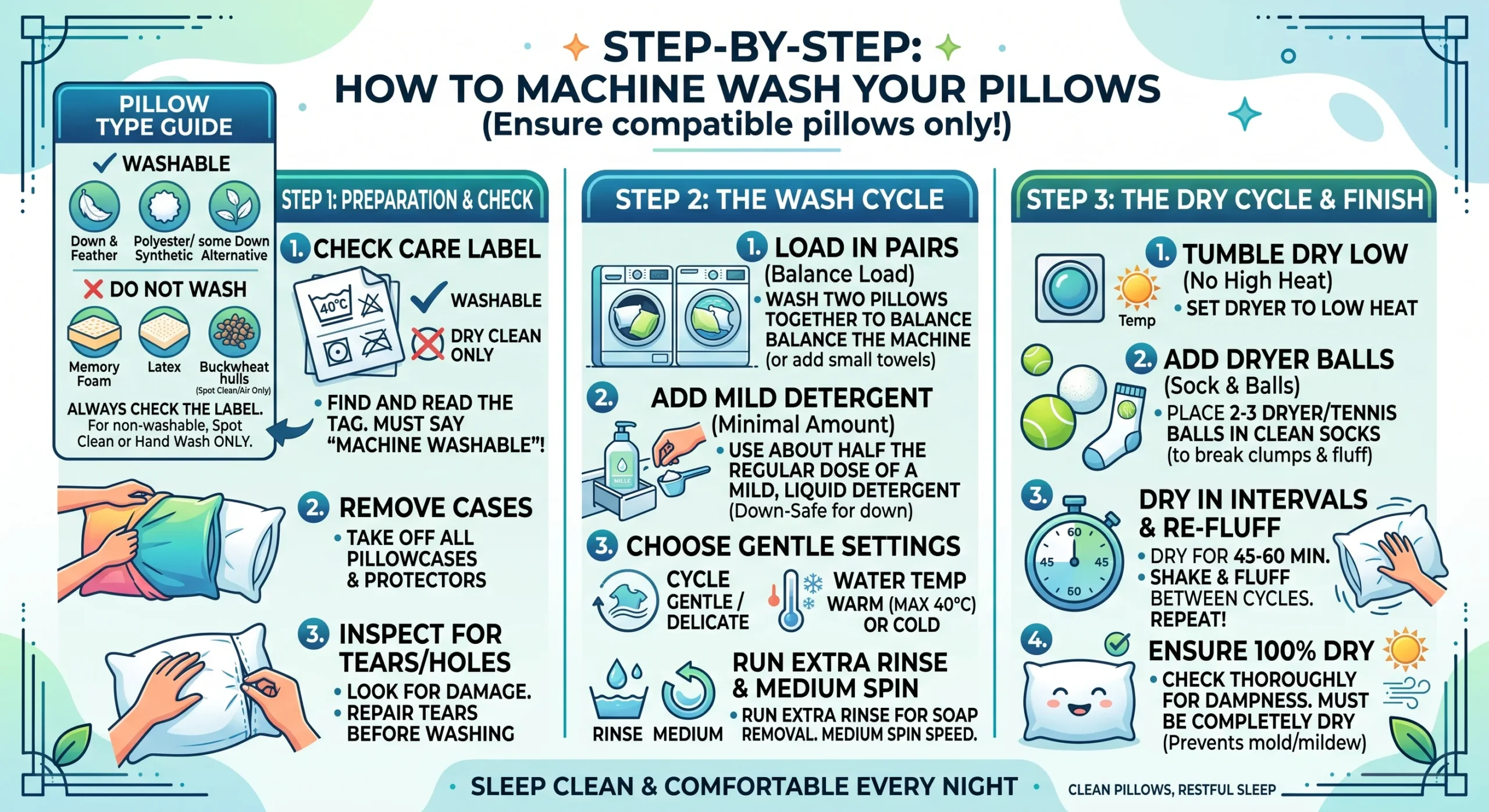
Most down, feather, cotton and polyester pillows can be machine washed. Memory foam and latex cannot, because the machine's agitation breaks the foam apart. Check the care label first. If there is no label, identify the fill by feel before you do anything else. When the pillow is washable, wash two at a time to keep the drum balanced, use a gentle or delicate cycle with cold water, use a small amount of detergent, and run an extra rinse. Drying is the step that goes wrong most often, so plan for it before you start.
First: can this pillow go in the machine? (the go/no-go table)
Check the go/no-go answer before doing anything else. This is the question most people actually have, and most guides bury it after several paragraphs of preamble.
| Fill type | Machine washable | Why |
|---|---|---|
| Down / feather | Yes | Tolerates gentle agitation and cold water well |
| Cotton / fiberfill | Yes | Loose fill handles a delicate cycle without breaking down |
| Polyester | Yes | Same as fiberfill; check for a specific manufacturer caution on older pillows |
| Memory foam | No | Agitation physically breaks the foam structure apart |
| Latex | No | Same failure mode as memory foam; the material does not recover |
| Buckwheat | No, not the hulls | The casing can be washed separately; hulls must stay dry |
If your pillow is memory foam, latex or buckwheat, stop here rather than improvising a machine cycle. Those fills need a different approach entirely, not a gentler version of this one.
There is no care label on my pillow. Now what?
A missing or faded label is extremely common on a pillow that has been in use for a few years, and most guidance simply assumes you have one. When you do not, identify the fill by feel instead. Memory foam and latex are dense, single-piece fills that compress slowly and spring back on their own; you can often see small venting holes on latex through the seam. Down and feather compress almost flat under light pressure and make a faint rustling sound. Polyester and fiberfill feel evenly soft with no dense core. Buckwheat is noticeably heavy and the hulls shift audibly when you move the pillow.
If you genuinely cannot tell after checking, treat the pillow as not machine washable and hand-wash or spot-clean it instead. That is the reversible choice: a pillow that goes through an inappropriate wash cycle does not come back, but one you were cautious with can still be washed properly once you know more.
Before you load: the damage check, and why it matters
Check every pillow for tears, thin patches or loose seams before it goes anywhere near the machine. This is not a formality. A damaged seam lets fill escape into the wash water during agitation, and that fill can clog the drum and, in worse cases, the drain pump. A pillow that fails this check should be hand-washed or repaired first, not machine washed regardless of how minor the damage looks.
Wash two at a time (the balance rule)
A single pillow, once wet, becomes a heavy, lopsided mass that throws the drum off-balance during the spin cycle, which can strain the machine and leave the pillow unevenly washed. Washing two pillows together keeps the load roughly symmetrical through the whole cycle. If you only have one pillow to wash, adding a few clean towels can serve the same balancing purpose.
Cycle, temperature and detergent settings
Use a delicate or gentle cycle, which reduces the agitation intensity compared to a normal cycle. Cold water is the safer default: it avoids the shrinkage risk that hot water carries for some fills and covers. A small amount of a mild detergent is enough; pillows do not need a full detergent dose because the fill itself does not carry heavy soil the way clothing does. Remove any pillow cover or protector first and wash it separately, following whatever its own tag specifies.
The extra rinse, and why thick items need it
Run an additional rinse cycle after the main wash. Pillows are thick and dense compared to most laundry, and detergent residue can stay trapped inside the fill through a single rinse. An extra rinse clears that residue more completely, which matters both for skin comfort against a pillowcase and for keeping the fill from clumping as it dries.
Straight into drying
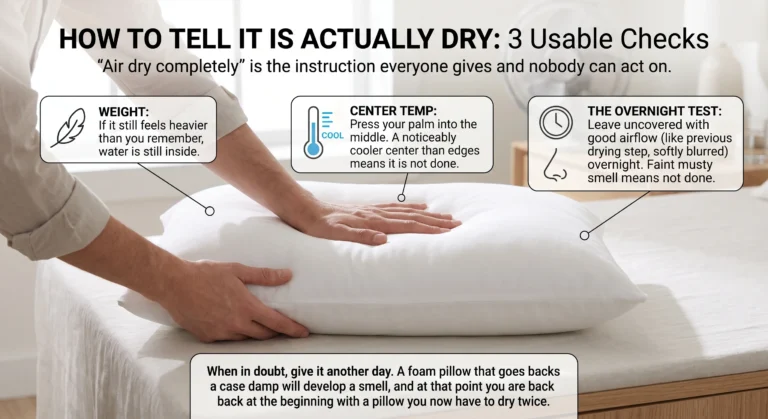
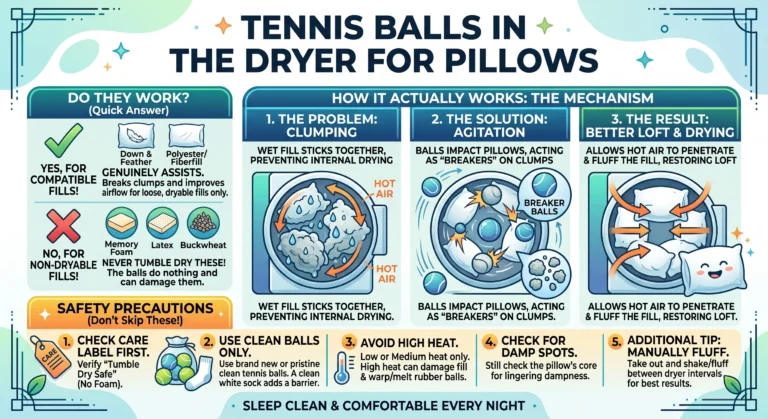
Drying is where most of the actual risk sits, more than the wash cycle itself. A no-heat or air-dry setting is the safer default for most fills, since heat can alter or damage filling, and dryer balls or clean tennis balls help break up clumping as the pillow tumbles. The full method, including the dryness test that tells you when it is genuinely finished rather than just dry on the outside, is in How to Dry Pillows Without Ruining the Fill.
What to do if you got it wrong
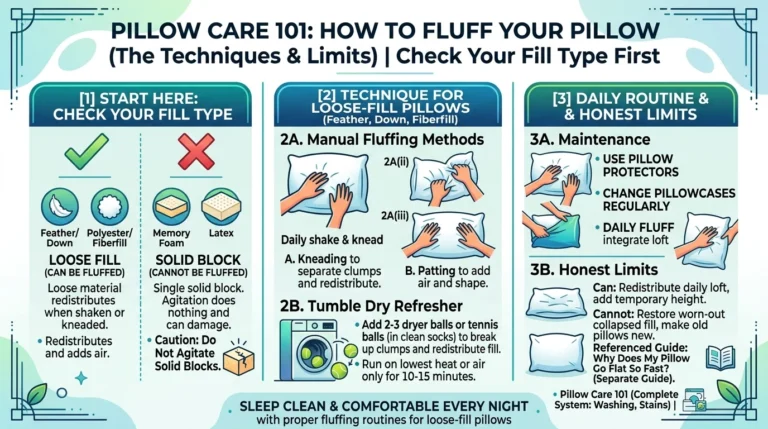
If a pillow comes out of the wash and dry cycle smelling musty, that is very likely a drying problem rather than a washing one: moisture trapped at the core lets mildew develop, particularly in feather fills. If it comes out lumpy or uneven, that is usually a fluffing and redistribution issue rather than a sign the wash failed outright. Both are addressed in the wider care system in Pillow Care 101, which also covers how often to repeat this whole process; see How Often Should You Actually Wash Your Pillows? If the actual problem you are dealing with is a visible yellow mark rather than general grime, How to Get Yellow Stains Out of Pillows covers that specifically, including a safety note worth reading before you reach for any stain remover.
FAQ
Can I wash a memory foam pillow in the washing machine?
No. Machine agitation breaks memory foam's structure apart, and that damage does not reverse. Memory foam pillows need a different, non-machine cleaning approach.
How many pillows should I wash at once?
At least two, so the load stays balanced during the spin cycle. A single wet pillow can throw the drum off-balance. If you only have one, add a couple of clean towels to balance the load instead.
What water temperature is safest for washing pillows?
Cold water is the safer general default, mainly to avoid shrinkage risk. Check the care label if one exists, since some materials may specify otherwise.
Do I need special detergent for pillows?
No. A small amount of a mild, ordinary detergent is enough. Pillows do not carry heavy soil the way clothing does, so a full detergent dose is unnecessary and harder to rinse out completely.
My pillow has no care label. Is it safe to guess?
Identify the fill by feel first: memory foam and latex are dense and slowly spring back, down and feather compress almost flat, polyester and fiberfill feel uniformly soft. If you still cannot tell, treat it as not machine washable and hand-wash or spot-clean instead.