
How to Wash Pillows in a Bathtub (Honest Guide)
Washing a pillow in a bathtub works for pillows that cannot go in a machine or do not fit one, but it comes with real trade-offs a sink-sized hand wash does not. A full-size pillow soaked in a tub becomes very heavy once wet, rinsing thoroughly takes several changes of water, and drying takes considerably longer than a machine spin cycle would allow for. Some fills, buckwheat in particular, should not be soaked in a tub at all. If you decide it is the right method, plan for the rinsing and drying stages to take longer than the washing itself. For the same bathtub-or-sink technique on a more general, smaller scale, see How to Hand-Wash a Pillow, the method hub this page builds on.
When the bathtub method is the right choice (and when it is not)
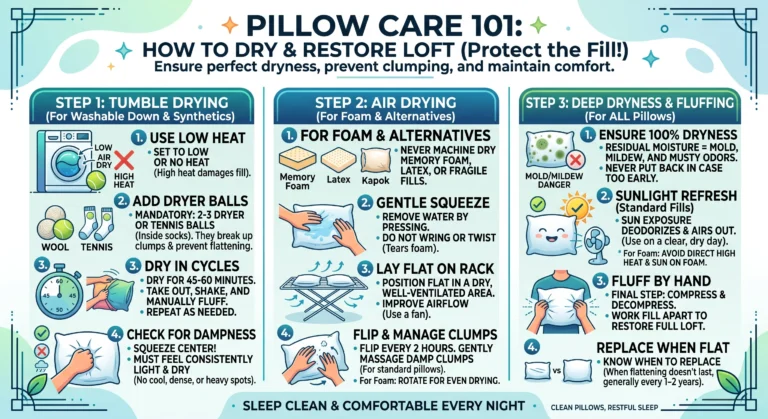
This is the right method when a pillow genuinely does not fit a washing machine, is too large or too delicate to trust to a drum, or the machine itself is not available. If your pillow can go in a machine, How to Wash Pillows in a Washing Machine is generally the faster, less physically demanding route, and it is worth ruling that out first. If you have not yet decided whether the bathtub is the right route at all, How to Hand-Wash a Pillow is the broader guide covering the same basic technique across fill types, and it is worth reading first. Most of what follows overlaps with that page; the real difference here is scale, and scale is what creates most of the practical problems this page covers. A full bathtub holds far more water and a far bigger pillow than a sink does, which changes how heavy, how slow to rinse, and how slow to dry the whole process becomes. For the fill-by-fill picture this page assumes you already know, Pillow Care 101 is the starting point.
Which pillows should not be soaked this way at all
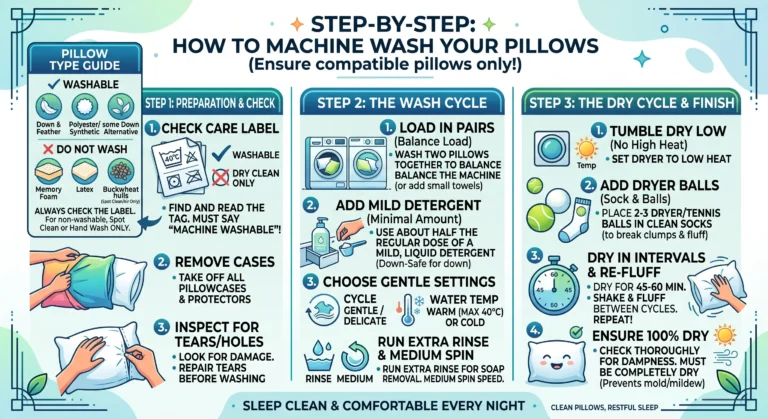
Before setting up anything, confirm the pillow's care label allows a wet soak in the first place. Memory foam and latex pillows generally should not be fully submerged; soaking can break down the material rather than clean it, and a spot method on their own dedicated pages is the safer route for those fills. Buckwheat-filled pillows should not be soaked in water at all: the hulls need to stay dry, and wetting them can ruin the fill entirely rather than clean it. How to Clean a Buckwheat Pillow covers what that fill actually needs instead. If you are not certain what your pillow is filled with, treat it as one of these delicate fills until you can confirm otherwise, since the bathtub method is not reversible once a fill that should stay dry has been soaked.
Setting up the bathtub soak
Once you have confirmed the fill can tolerate a full soak, fill the tub with water and add a mild detergent according to its own label, distributing it through the water before the pillow goes in. A clean tub matters more here than it might for a quick sink rinse, since the pillow will be sitting in that water for a while and picking up whatever is already on the tub's surface. Give yourself more room and more time than you would for a sink wash. A bathtub-sized soak is not a faster version of hand-washing; it is a bigger version, and it behaves differently because of that size, not despite it.
Washing and rinsing (the stage that goes wrong most often)
Press and work the water through the pillow by hand so the detergent reaches the fill, not just the outer fabric, then drain the soapy water. This is where the bathtub method most often goes wrong: rinsing a large, fully saturated pillow thoroughly requires several changes of clean water, not one rinse, because detergent residue sitting deep in a thick fill is not visible until the pillow has fully dried and feels stiff or smells faintly off. Refill the tub with clean water, press it through the pillow again, and repeat until the water running out is clear rather than cloudy or sudsy. Rushing this stage is the single most common reason a bathtub-washed pillow does not turn out well.
Getting the water out of a pillow this heavy
A fully wet pillow is considerably heavier than its dry weight, and that matters as soon as you try to lift it out of the tub. Lift with both hands supporting the full weight from underneath rather than gripping one end, since a saturated pillow's own seams can strain or tear under its own weight if it is picked up carelessly. Press out as much water as possible while it is still in the tub, pressing down rather than wringing or twisting, which can damage fill and seams. Once most of the water is pressed out, press the pillow firmly between clean, dry towels, replacing the towels as they become saturated, before moving on to drying.
Drying a bathtub-washed pillow
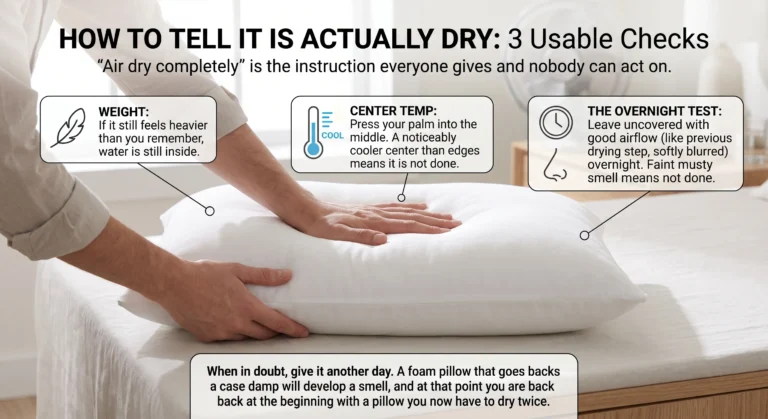
Dry the pillow flat, in a well-ventilated area, turning and fluffing it periodically so moisture does not stay trapped in one section of the fill. This takes considerably longer than a machine's spin-and-tumble cycle would, since a bathtub wash starts with more retained water and no mechanical extraction step. How to Dry Pillows Without Ruining the Fill covers the full method, including what to watch for with different fill types, and it is worth following closely here: a pillow that is not dried completely to the core will develop a musty smell and, in worse cases, mildew, which is a harder problem to fix than the original need for a wash.
Why this method is harder than it looks
Bathtub-wash content generally presents this as a simple, free substitute for a washing machine, and the washing step genuinely is simple. What gets skipped is everything after it. A fully saturated pillow can be significantly heavier than its dry weight, and lifting or pressing it without straining a seam takes real, sustained effort, not a quick squeeze. Incomplete rinsing is common precisely because it is hard to tell by looking whether the water running out is truly clear, and detergent left behind only shows up later as stiffness or a faint smell. Drying without a spin cycle takes meaningfully longer than most readers expect going in, and a pillow left even slightly damp at its core is where mildew and odor problems actually come from. None of this means the method does not work. It means the honest picture includes the rinsing and drying stages, not just the wash.
FAQ
Can I wash any pillow in a bathtub?
No. Memory foam and latex generally should not be fully submerged, and buckwheat hulls should never be soaked at all. Check the pillow's own care label before starting, and if you are unsure of the fill, treat it as one that should not be soaked until you can confirm otherwise.
How much heavier does a pillow get when it's soaked in a tub?
A fully wet pillow is considerably heavier than its dry weight, enough that lifting it with one hand or by a corner risks straining the seams. Support the full weight from underneath with both hands rather than gripping one end.
Why does rinsing take so long?
Detergent residue sitting deep inside a thick fill is not visible until the pillow dries and feels stiff or smells faintly off, so one rinse is rarely enough. Refilling and pressing clean water through the pillow multiple times, until the water runs clear, is what actually gets the residue out.
How long does a bathtub-washed pillow take to dry?
Longer than a machine cycle allows for, since there is no spin step to remove most of the water first. Pressing out as much water as possible with towels before laying it flat to air-dry, and turning it periodically, shortens the process, but it is still a multi-stage, unhurried process rather than a quick dry.
What happens if the pillow doesn't dry all the way through?
A pillow that is not dried completely to the core can develop mildew or a musty smell that is worse than whatever the pillow smelled like before the wash. This is the most common way a bathtub wash goes wrong, and it is why the drying stage deserves as much attention as the washing stage.