How to Clean a Buckwheat Pillow (Hulls and Casing Separately)
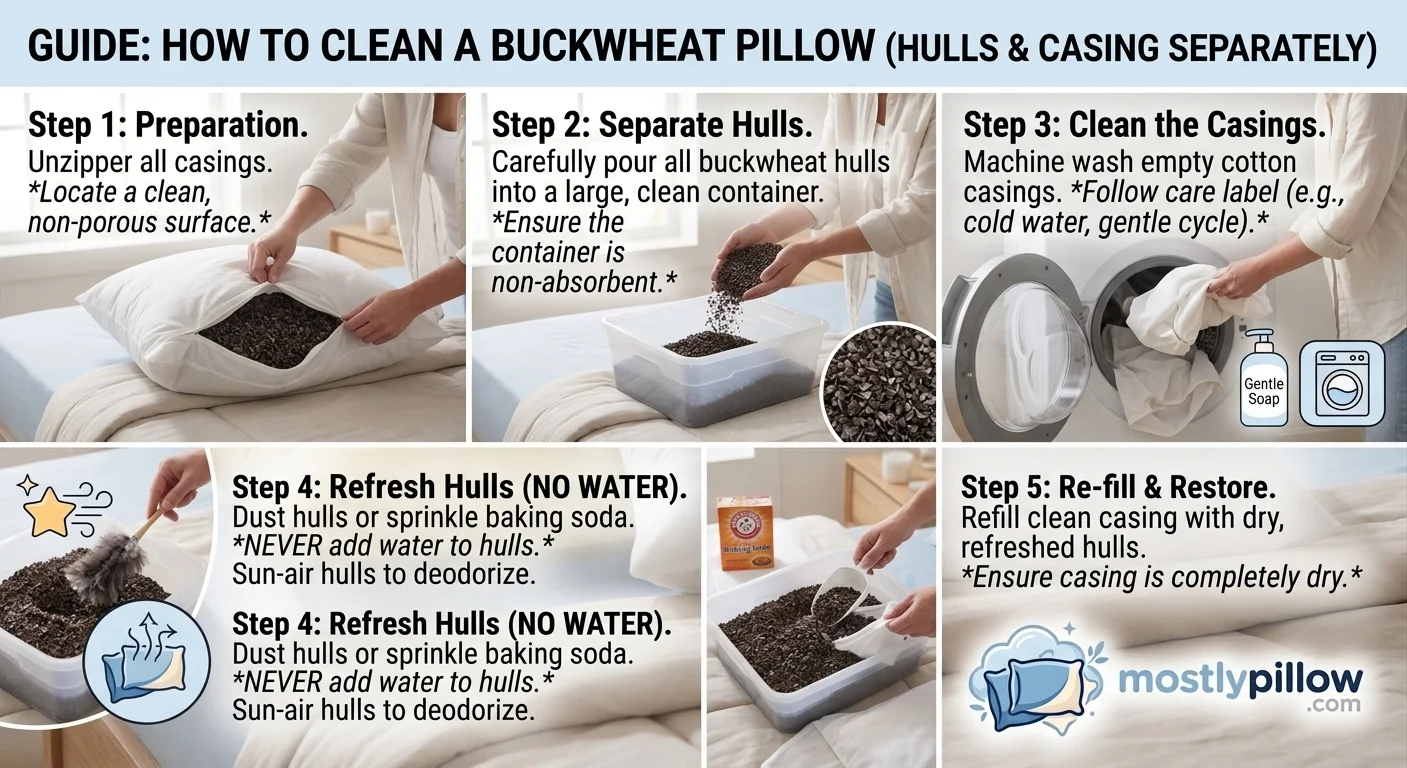
A buckwheat pillow is two separate things and they are cleaned separately. The hulls inside must never get wet. Water breaks them down and wet hulls are prone to mold. To refresh them, spread them out in direct sunlight for a few hours, once or twice a year. The casing is emptied first, then washed cold on a gentle cycle with a mild detergent and dried completely before the hulls go back in. If a real spill reaches the hulls, replacing them is usually the practical answer rather than trying to dry them out.
The thing to understand first
Almost every mistake made with a buckwheat pillow comes from treating it as one object.
It is not. It is a fabric casing, which behaves like any other washable textile, and a filling of buckwheat hulls, which behaves like a dry good. Those two things have nothing in common from a cleaning point of view, and the instruction that applies to one is usually the exact opposite of the instruction for the other.
Once you hold that in mind, the whole procedure becomes obvious. The casing wants water. The hulls want sunshine and dry air, and water is the one thing that ends them.
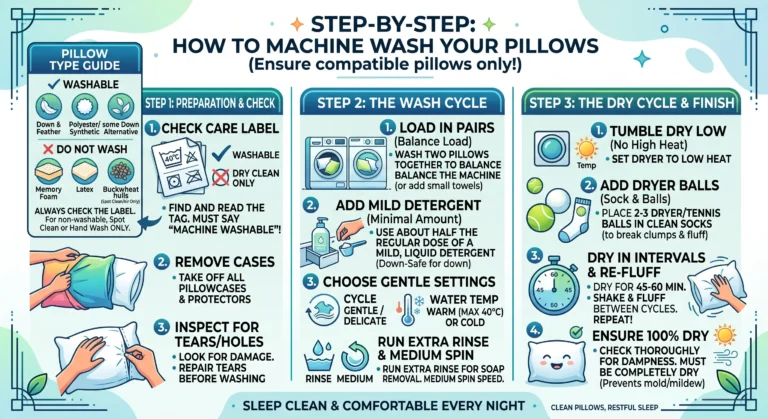
If you arrived here from a general washing guide, that is the correct route: How to Wash Pillows in a Washing Machine sends buckwheat here precisely because the standard procedure does not apply.
What each part needs
| The hulls | The casing | |
|---|---|---|
| Water | Never | Yes, cold |
| Machine wash | Never | Yes, gentle cycle |
| Detergent | Never | Mild, no harsh formulas |
| Machine dry | Never | Check the label, air dry is safest |
| Sunlight | Yes, this is the main method | Optional, fine |
| How often | Once or twice a year | As often as any pillowcase, or when it needs it |
| If it gets soaked | Replace | Wash and dry it again |
How to empty the hulls without losing them
This is the only genuinely awkward step and most guides skip past it. A pillow's worth of hulls scattered across a bedroom floor is an unpleasant afternoon.
- Work over a clean, hard floor, not carpet and not a bed. If hulls do escape, you want to be able to sweep them up and put them back.
- Have the destination ready first. A large container with a lid, a clean bucket, or a heavy-duty zip bag. It needs to be bigger than you think, because loose hulls take up more room than compressed ones.
- Make a funnel from a rolled sheet of paper or card if the container's mouth is narrow. Tape it so it holds its shape.
- Open the zipper fully, gather the casing around the funnel or the container mouth, and tip slowly. Do not shake. Let gravity do it.
- Turn the empty casing inside out over the container and shake the last of the hulls and the accumulated dust out of the corners.
- Close the container before you move it anywhere.
Take the chance to look at the hulls while they are out. Hulls that have broken down into powder and small fragments have reached the end of their useful life, which is worth knowing before you spend an afternoon cleaning them.
Refreshing the hulls in the sun
This is the only cleaning the hulls get, and it is the whole method.
Spread them out in a single shallow layer on a flat surface. A clean baking tray works well, and several trays are better than one deep pile. Put them in direct sunlight, either outdoors on a dry day or on a tray in front of a sunny window, and leave them for three to four hours. Stir them once partway through so the ones underneath get their turn.
Sunning does two things: it drives off any moisture the hulls have picked up from the humidity in the room and from your body overnight, and sunlight is a natural deodorizer. A pillow that has started to feel slightly heavy or smell faintly musty is usually telling you the hulls have taken on ambient moisture, and this fixes it.
Once or twice a year is the usual recommendation. If you live somewhere humid, or if you notice the pillow feeling denser than it used to, do it more often. It costs nothing and there is no way to overdo it.
Do not wash the hulls, ever. Not a rinse, not a quick spray, not a damp cloth. Water breaks the hull structure down, and wet hulls are prone to mold developing quickly, generally within a day or two. There is no drying method that reliably rescues hulls that have been genuinely wetted, because the moisture gets inside the individual hulls where sun and air cannot reach it fast enough.
Washing and drying the casing
With the hulls out, the casing is just a piece of fabric and it is treated like one.
Wash it in cold water on a gentle cycle with a mild detergent. Avoid harsh formulas, which damage fabric fibers over time, and avoid bleach. Many buckwheat casings are cotton or a cotton blend and will shrink in hot water, which matters more than usual here: a casing that shrinks will not hold the same volume of hulls.
Air drying is the safest option, and it is also the one that makes step three easier to get right. If the label permits a dryer, use low heat.
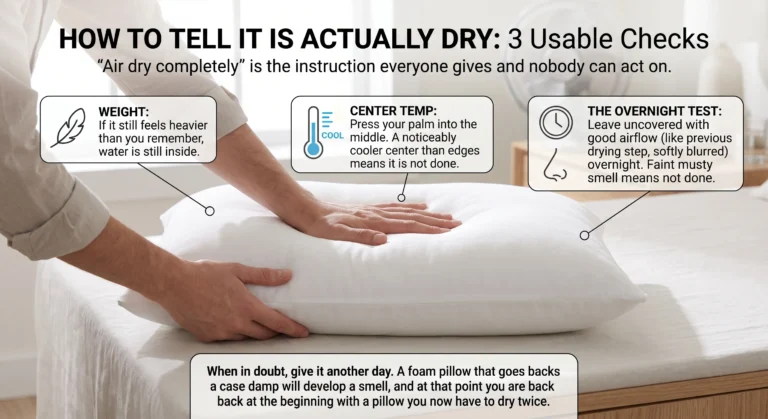
The casing must be completely dry before the hulls go back in. This is the one step where the two halves of the pillow meet, and it is where an otherwise careful job goes wrong. A casing that is even slightly damp will transfer that moisture straight into the hulls, and you have then created the exact problem the whole procedure exists to avoid. Give it an extra day if you are not certain. The seams and the zipper tape hold moisture longer than the flat fabric does.
Putting it back together
Reverse the emptying process. Funnel or container mouth to open zipper, pour slowly, and do not overfill: leave enough room that the pillow can be shaped, since the adjustability of the loft is one of the reasons to own this kind of pillow in the first place.
Zip it fully closed and shake the pillow to distribute the hulls before use.
If something spills on the hulls
The honest answer, and the one given consistently across buckwheat pillow guidance, is that a real spill onto the hulls means replacing the hulls.
This is not a failure. Hulls are a consumable part of the pillow, sold separately, and replacing them is the intended path. Trying to save a batch of hulls that has had coffee or water poured through it means gambling an entire pillow against a mold problem you cannot see forming inside individual hulls.
A few drops caught immediately are a different case. Remove the affected hulls with a spoon, discard them, sun the rest, and move on.
Hull lifespan and topping up
Hulls do not last forever. They compress and fragment with use, and a pillow that has gone noticeably flatter or feels finer and more sand-like than it used to is telling you the fill is breaking down.
Replacement hulls are sold on their own, and topping up a pillow that has lost some volume is normal maintenance rather than a repair. Do it when the pillow no longer holds the loft you want after shaping, and take the opportunity to wash the casing at the same time since it is already empty.
What never to do to a buckwheat pillow
- Put the whole pillow, hulls included, in a washing machine
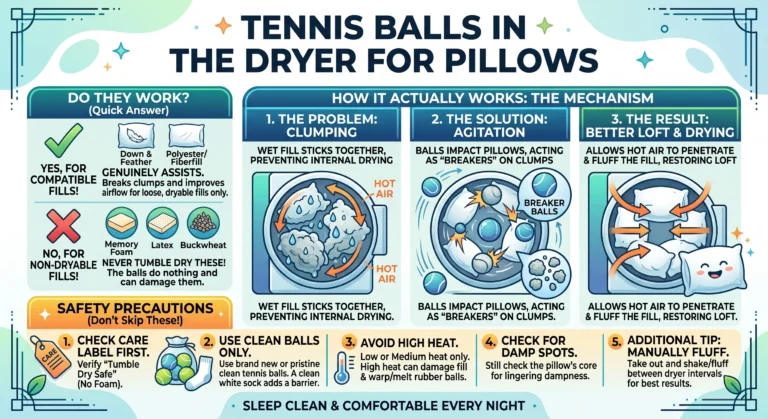
- Put the hulls in a dryer
- Spray, mist or damp-wipe the hulls
- Return hulls to a casing that is not completely dry
- Store the pillow somewhere damp, such as a basement or an unventilated closet
- Compress it under heavy items in storage, which accelerates hull breakdown
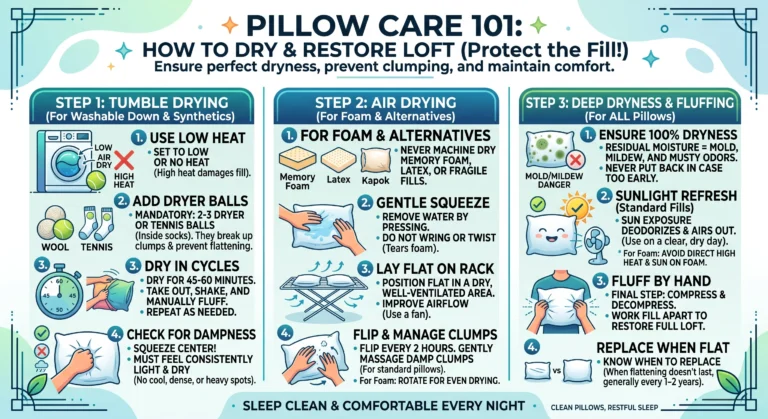
If the pillow has developed a smell and the hulls are dry, the odor is more likely in the casing or is a sign the hulls have reached the end of their life. How to Get Smells Out of a Pillow sorts odors by type, and the dry methods there are the appropriate ones here. If you were looking for a wet cleaning method for a different fill, Hand-Washing and Spot-Cleaning Pillows That Cannot Go in a Machine covers that. For the overall routine, Pillow Care 101 is the overview.
FAQ
Can I put the whole buckwheat pillow in the washing machine?
No. The casing can go in once it is empty. The hulls cannot go in under any circumstances.
What happens if the hulls get wet?
They break down, and wet hulls are prone to mold forming quickly. In most cases the sensible response to genuinely wet hulls is to replace them rather than attempt to dry them.
How often should I sun the hulls?
Once or twice a year is the usual guidance. More often in a humid climate, or whenever the pillow starts to feel heavier or smell faintly musty.
Can I use a hair dryer or an oven to dry the hulls faster?
No. Heat is not the same as sun and air, and it risks scorching or further breaking down the hulls. Spread them thinly and give them the time.
Do I need to replace the hulls on a schedule?
There is no fixed interval. Judge it by the pillow: when it has flattened, when the hulls feel powdery, or when shaping no longer holds, it is time to top up or replace.
Is a musty smell from a buckwheat pillow a health problem?
That is a question for a clinician rather than a cleaning guide. The practical response is to sun the hulls if they are dry, and replace them if they have been wet.