Tennis Balls in the Dryer for Pillows: Do They Work?
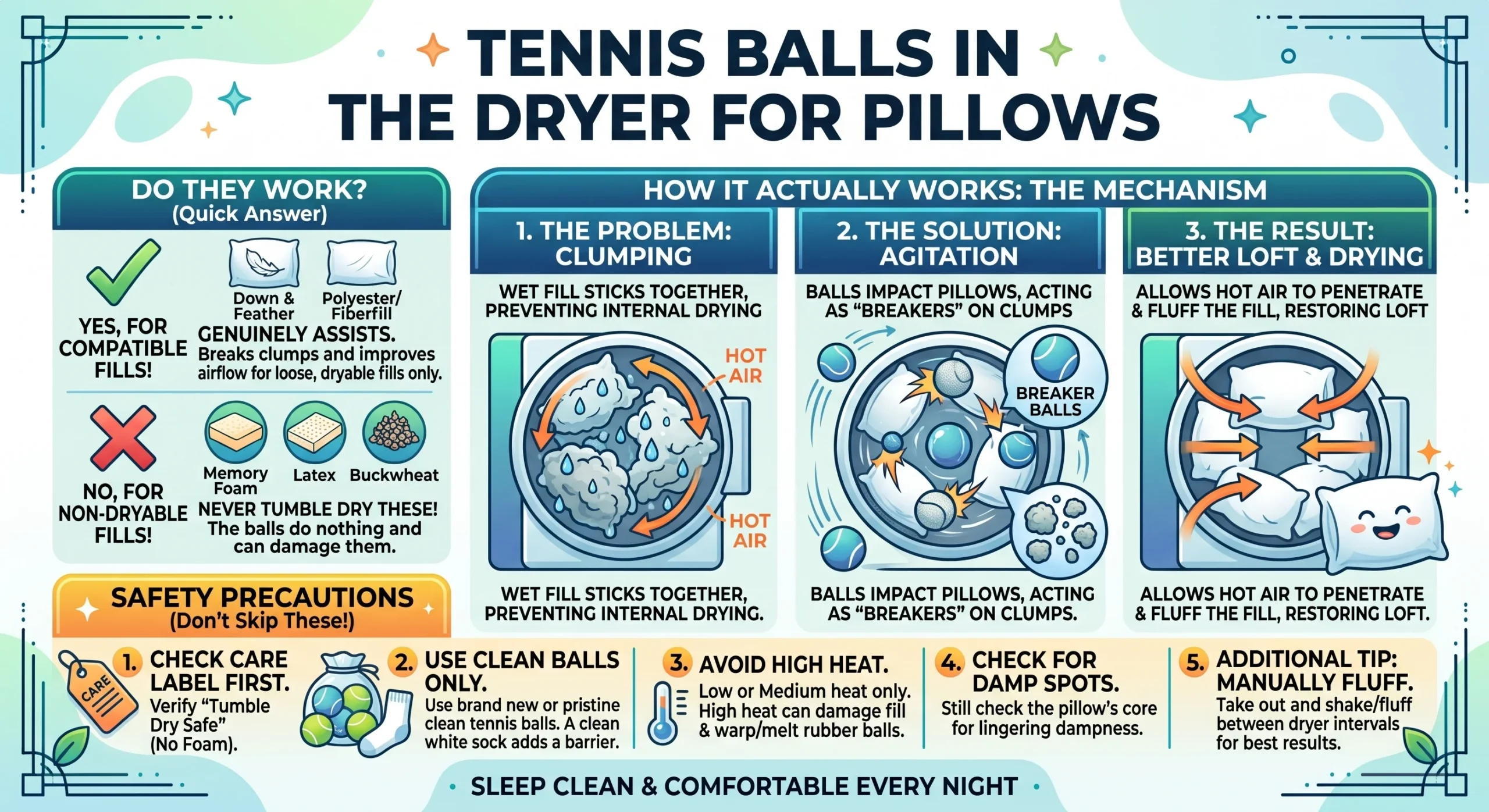
Yes, clean tennis balls (or wool dryer balls) genuinely help when drying a washed pillow, but only for fills that are safe to tumble in the first place: down, feather, and polyester or fiberfill. As the dryer turns, the balls repeatedly strike the pillow, which breaks up clumps of wet fill before they can dry stuck together and helps hot air move through the load instead of just around it. They do nothing useful for memory foam, latex, or buckwheat pillows, because those fills should not go in a dryer at all, tennis balls or not. What follows is the actual mechanism, which pillows it applies to, and the safety details most of the trick’s popularity glosses over.
What the tennis balls are actually doing
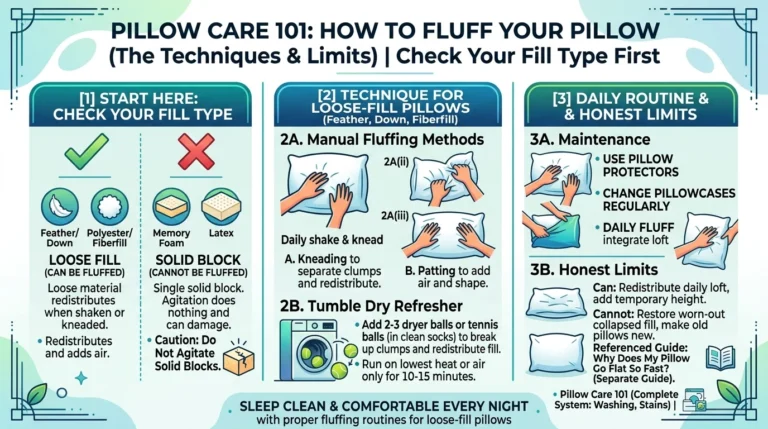
The trick works on a simple mechanical principle. Wet down or synthetic fill wants to clump together as it dries, especially in the corners and seams of a pillow, and once it clumps and dries in that shape it tends to stay that way. A tennis ball tumbling alongside the pillow physically strikes it on every rotation, breaking up those clumps before they set. The balls also take up space in the drum, which keeps a pillow from just sitting in one flattened position and helps warm air circulate around it rather than the pillow acting as one dense, slow-drying mass.
This is the same principle behind dedicated wool dryer balls, which are designed to do the same job. Tennis balls are a household substitute, not a purpose-built product, and they come with a couple of trade-offs a wool dryer ball doesn’t have.
Which pillows this actually applies to
| Fill type | Safe to tumble dry with balls | Why |
|---|---|---|
| Down / feather | Yes, this is the classic use case | Loose fill clumps badly when wet; balls break clumps up as it dries |
| Polyester / fiberfill | Yes | Same clumping issue, though generally less severe than down |
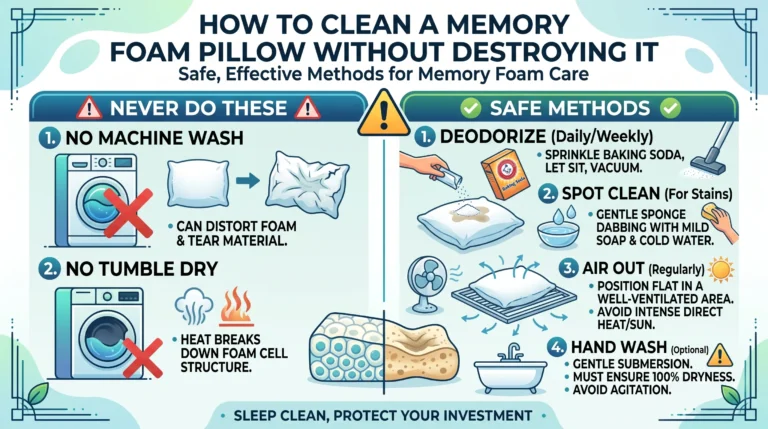
| Memory foam | No | Foam is a solid block, not loose fill. There’s nothing to break up, and tumbling can damage the foam structure |
| Latex | No | Same issue as memory foam: a solid core, and heat and tumbling risk damaging it |
| Buckwheat | No | The hulls should never go in a dryer; only the empty casing is machine dried, separately from the hulls |
If you’re not sure what your pillow is filled with, the fill identification check in Pillow Care 101 walks through it by feel. Getting this wrong is the actual risk with this trick, not the tennis balls themselves: putting a foam or latex pillow in the dryer at all is the mistake, and no amount of tennis balls fixes that.
How to actually do it
The process itself is simple, but a few details are worth getting right:
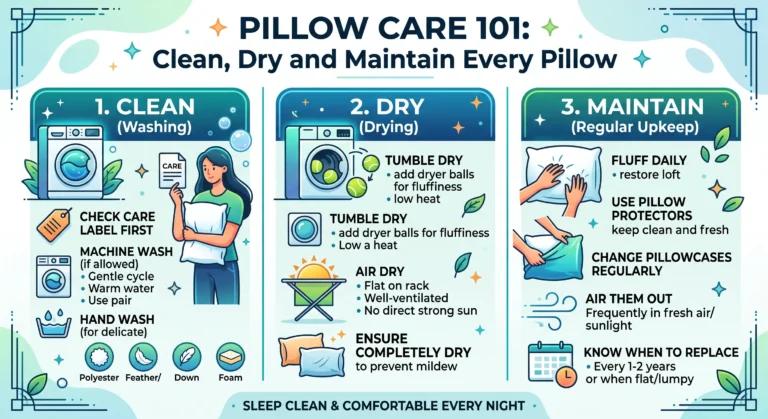
- Wash the pillow first, using the method that matches its fill. Tennis balls are a drying aid, not a cleaning method.
- Add two to four clean tennis balls to the dryer along with the pillow. Washing two pillows at once, if your dryer has room, helps balance the load and dry more evenly than a single pillow tumbling alone.
- Set the dryer to no-heat or low-heat. High heat is where the rubber-smell issue below actually shows up, and it’s also harder on the fill itself.
- Run a longer cycle in shorter stretches, checking and reshaping the pillow by hand every 20 to 30 minutes rather than leaving it for one long run. This catches clumping the balls miss and gives you a chance to check whether the core is actually drying, not just the surface.
- Squeeze-test before you stop. A pillow that feels dry on the outside can still be damp at the center; the full check is below.
Tennis balls versus dedicated dryer balls
Tennis balls work, but they are not the ideal tool, for a few practical reasons. Tennis ball rubber is not designed for repeated dryer heat, and on a high-heat cycle the rubber can soften enough to give off a faint rubbery smell, which can transfer to the pillow. Wool dryer balls are made to tolerate normal dryer heat without that issue and tend to be quieter. If you have wool dryer balls on hand, they’re the better choice. If tennis balls are what you have, they still do the job, provided you keep the cycle on low or medium heat rather than high.
A common piece of advice is to use two balls per pillow, though the exact count matters less than the two things that actually affect the result: using clean balls (not ones that have been rolling around a dusty garage) and keeping the heat setting moderate rather than maxed out.
The dryness check that matters more than the tennis balls
A pillow can feel dry on the outside while the core, especially the center of a down pillow, is still damp. This is the actual cause of most “my pillow smells musty after washing” complaints, and it has nothing to do with whether you used tennis balls. Squeeze the center of the pillow firmly after the cycle finishes; if it feels at all cool or heavy compared to the edges, it needs more time. The full drying process and how to judge doneness is in How to Dry Pillows Without Ruining the Fill.
What to do if you don’t have a dryer
Tennis balls only matter if you’re using a dryer in the first place. Down and feather pillows can also be air-dried, though it takes considerably longer and needs regular fluffing by hand to prevent the same clumping the tennis balls are meant to solve mechanically. How to Wash Down and Feather Pillows covers the full wash-to-dry process for that fill, including the air-dry route.
If the pillow is already flat, not just wet
A pillow can come out of the wash and dryer looking flatter than it went in, and tennis balls alone won’t fix that if the underlying issue is worn-out fill rather than clumping. How to Fluff a Pillow covers the fluffing techniques that work once the pillow is fully dry, and what to do if fluffing doesn’t bring it back.
FAQ
Can I use tennis balls to dry a memory foam pillow?
No. Memory foam should not go in a tumble dryer at all, tennis balls or not. The heat and tumbling can damage the foam structure, and foam doesn’t have loose fill for the balls to break up in the first place. Memory foam pillows are air-dried; see How to Clean a Memory Foam Pillow for the safe process.
How many tennis balls should I use per pillow?
There’s no strict rule. A commonly cited guideline is two balls per pillow, but using clean balls and a low or medium heat setting matters more than hitting an exact number.
Do tennis balls damage pillows?
Used on a low or medium heat setting with clean balls, they’re generally considered safe for down, feather, and polyester pillows. The main risk is using them on a high-heat cycle, where the rubber can soften and transfer a faint smell, or using them on a fill (foam, latex, buckwheat) that shouldn’t be in a dryer at all.
Are wool dryer balls better than tennis balls?
Wool dryer balls are purpose-built for dryer heat and don’t carry the rubber-smell risk that tennis balls can on high heat. If you have both on hand, wool dryer balls are the slightly better choice, but tennis balls do the same basic job.
Do I need to put tennis balls in socks before using them?
It’s not required. Some people do this to reduce noise or to keep the balls from marking a lighter-colored pillow cover, but it doesn’t change how the balls function.