How to Fluff a Pillow (Not Every Pillow Can Be)
This page covers the technique: how to actually fluff a pillow, and the honest limit of what fluffing can do. If you want to know why a pillow keeps going flat faster than it should, that’s a separate question answered in Why Does My Pillow Go Flat So Fast?
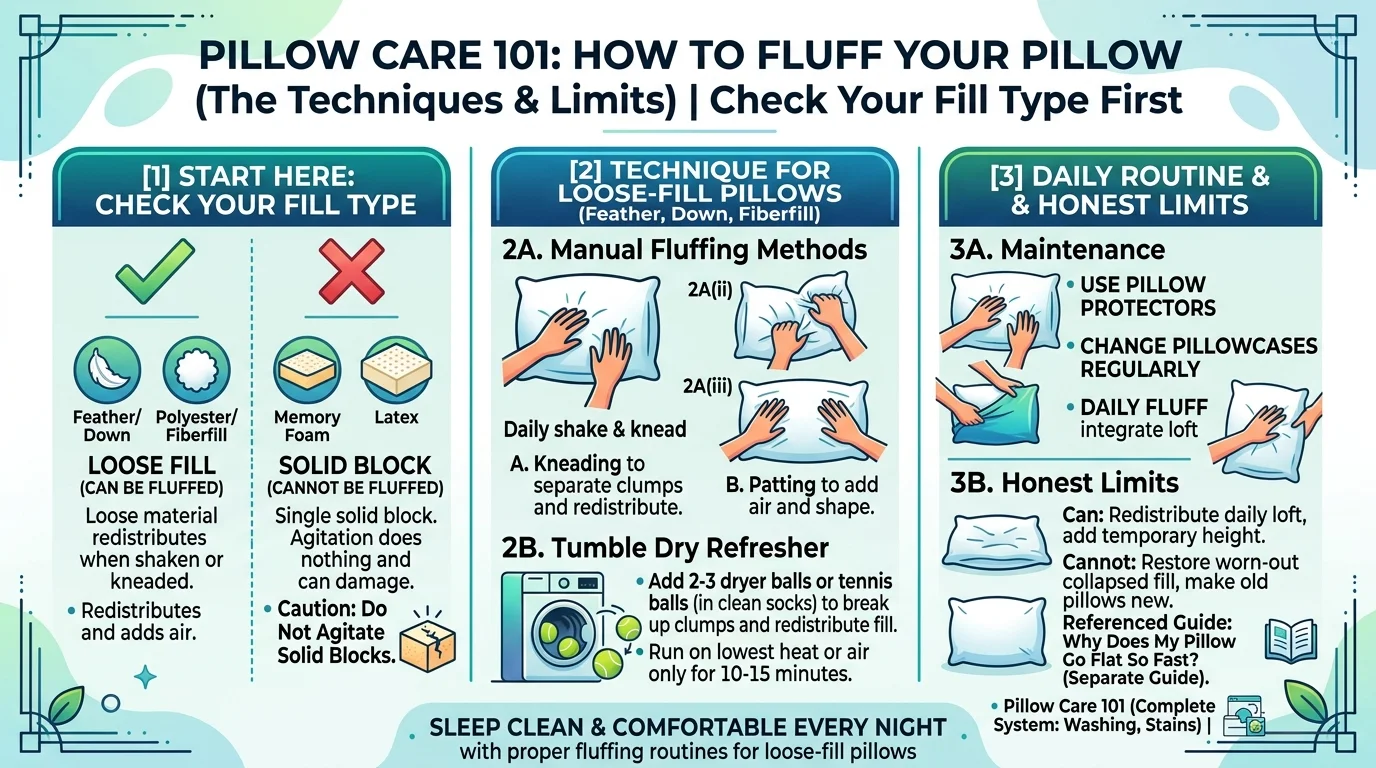
How you fluff a pillow depends entirely on what’s inside it. Down, feather, fiberfill and polyester pillows can genuinely be fluffed, because the loose fill redistributes when you shake, knead or tumble it. Memory foam and latex pillows cannot be fluffed at all, no matter the technique, because the fill is a single solid block rather than loose material. Agitating it does not reorganize anything, and can actually damage it. Check your fill first, then use the method that actually matches it. This is one piece of a larger routine; the full system covering washing, drying and stains by fill type is in Pillow Care 101.
Check your fill first: can this pillow actually be fluffed?
Before you shake, knead or throw anything in the dryer, find out what’s actually inside the pillow. The care label is the fastest way, if it’s still attached. Without one, feel and behavior tell you almost everything: memory foam is a single dense block that slowly springs back when you press it. Latex feels similar but a little springier, often with visible venting holes molded into the surface. Down and feather compress almost flat under your hand and rustle faintly. Polyester and fiberfill feel uniformly soft and springy all the way through, with no dense core.
That single check decides which section below applies to you. A pillow with loose fill can be worked back into shape by hand or in a dryer. A pillow with a solid or bonded fill cannot, and trying anyway wastes effort at best and damages the pillow at worst.
Why foam and latex pillows cannot be fluffed (the mechanism, not a workaround)
Fluffing works by disturbing loose material so it redistributes and reopens air pockets that got compressed under nightly weight. Down, feather, fiberfill and polyester pillows are all made of many small, separate pieces (feathers, clusters, fibers) with air gaps between them. Shake the pillow, knead it, or tumble it in a dryer, and those pieces shift, separate, and trap air again. That’s the entire mechanism, and it’s why the same handful of techniques works across every loose-fill material.
Memory foam and latex pillows aren’t built that way. They’re a single molded block, or in the case of shredded foam pillows, foam pieces bonded or packed tightly enough that they behave as one mass rather than loose fill. There’s no separate structure to reopen, because there was never loose material to redistribute in the first place. Loft in a foam or latex pillow comes from the material’s own density and resilience, not from air trapped between pieces. Agitating a solid block doesn’t reorganize anything, and repeated flexing, punching or tumbling can stress and break down the foam’s cell structure over time, which makes the pillow worse, not better.
This is the detail most fluffing advice skips or mentions only in passing before moving straight into generic shake-and-tumble instructions that apply to a fraction of the pillows people actually own.
How to fluff a fiberfill or polyester pillow
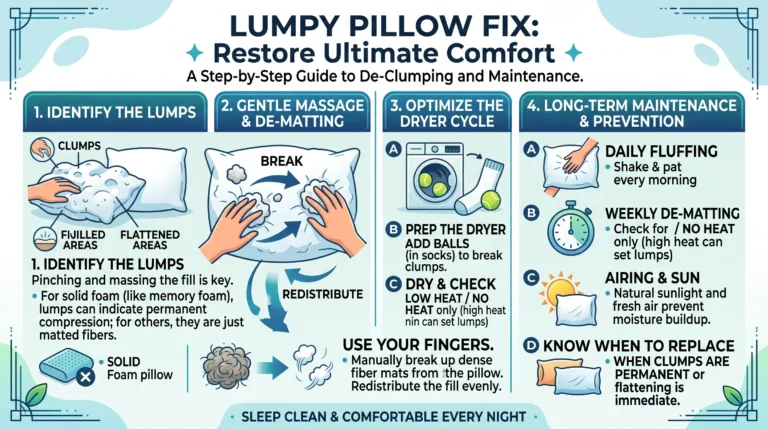
Fiberfill and polyester pillows respond well to a straightforward hand method. Hold the pillow at both ends, compress it, and let it expand back out; repeat several times. Rotate it 90 degrees and do the same along the other axis, so the fill redistributes in both directions rather than just one. Kneading the pillow with your hands, working from the center outward, breaks up any clumps that have formed.
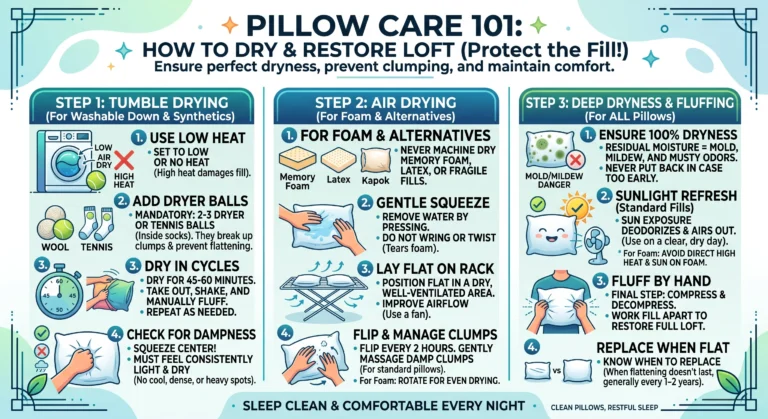
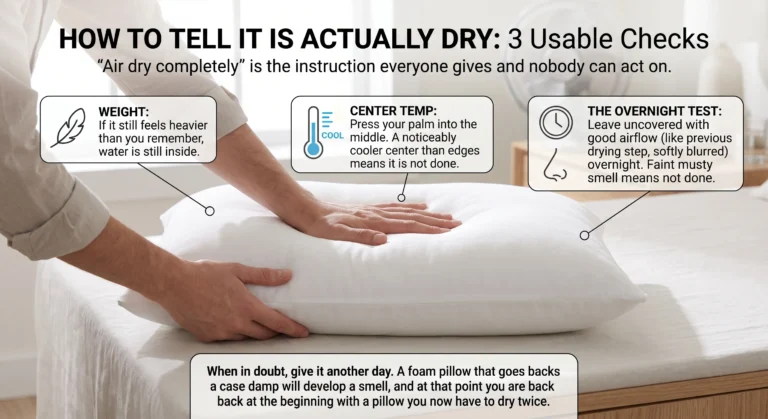
If the care label allows machine drying, a low-heat, no-heat, or air-fluff cycle with a couple of dryer balls (or clean tennis balls) tumbles the fill and separates clumped fibers more thoroughly than hand-fluffing alone. Check the label before using any heat setting; not every polyester pillow is rated for the dryer. How to Dry Pillows Without Ruining the Fill covers the fuller drying procedure, including how to confirm a pillow is actually dry at the core rather than just on the surface.
How to fluff a down or feather pillow
Down and feather pillows use the same basic principle, with a gentler touch. Down clusters and feathers are more delicate than synthetic fiber, so aggressive punching can break feather quills rather than just redistributing fill. Hold the pillow by two corners and shake it firmly, then rotate and repeat from the other corners. Kneading works here too, applied more gently than you would with a polyester pillow.
A no-heat or low-heat dryer cycle with dryer balls is the standard machine method for down and feather, again only if the care label confirms the pillow can be tumble dried. Down and feather that has gone flat from ordinary compression usually responds well to this treatment; down and feather that has gone flat because it’s actually worn out or was never dried completely after washing will not improve no matter how long you tumble it, which is covered further down.
What to do instead if you have a foam or latex pillow
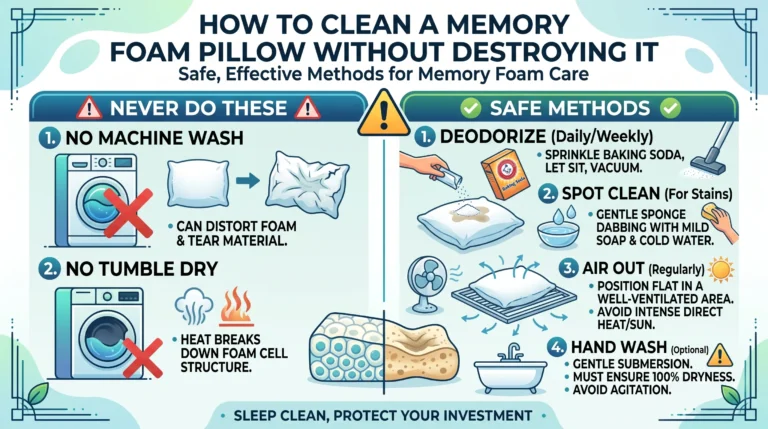
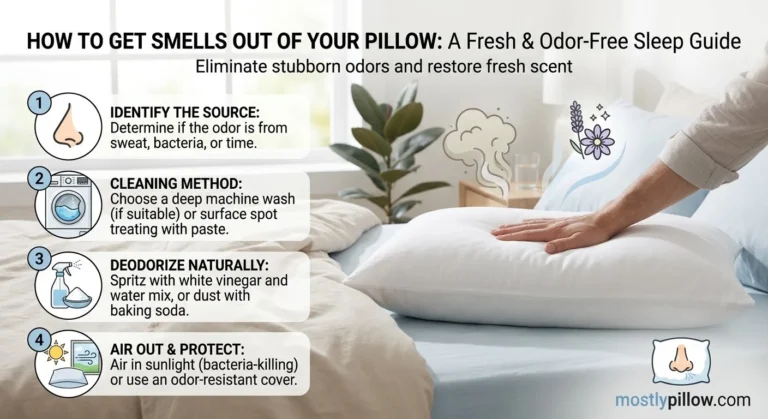
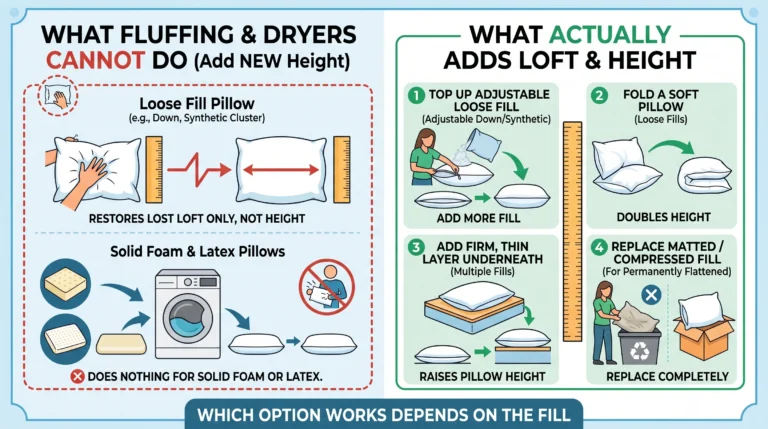
A flat foam or latex pillow isn’t stuck with no options, it just needs a different conversation than fluffing. Start by checking whether the pillow is actually dirty rather than genuinely worn out; sweat, oils and moisture can make foam feel duller and less resilient even before the material itself has broken down, and a proper wash can restore some of that responsiveness. How to Clean a Memory Foam Pillow Without Destroying It and How to Clean a Latex Pillow cover the safe cleaning process for each, since neither goes in a washing machine.
If the pillow is clean and still flat, the foam or latex has genuinely lost resilience, and that’s a material aging process rather than something a technique can reverse. At that point the honest options are living with reduced loft, adding a thin topper-style pillow underneath for extra height, or replacing the pillow. There’s no trick that restores a foam or latex block’s original density once it’s gone.
When fluffing will not fix it, even on a fluffable fill
Fluffing restores loft that’s been temporarily compressed. It doesn’t reverse everything that can go wrong with a pillow. If a down, feather, fiberfill or polyester pillow stays flat even after a proper fluffing and a full dry cycle, something else is likely going on: the fill may have genuinely broken down from age, moisture and body oils may have built up enough to weigh the fill down permanently, or a past washing or drying mistake may have collapsed loft that fluffing can’t rebuild. Why Does My Pillow Go Flat So Fast? walks through those causes and how to tell which one applies to your pillow, so you’re not fluffing the same pillow over and over expecting a different result.
Mistakes that make a pillow look flatter, not fuller
A few habits actively work against you. Fluffing a pillow that’s still damp from washing traps moisture inside instead of loft, and it can also encourage mildew; dry it completely first. Using high heat on a fill that’s only rated for low heat or no heat can scorch or degrade the fibers, which permanently reduces how much they’ll spring back. Over-stuffing a dryer with multiple pillows at once means none of them get enough room to actually tumble and separate. And punching or aggressively striking a foam or latex pillow, thinking more force will eventually work, only stresses material that was never going to respond to agitation in the first place.
FAQ
Can any pillow be fluffed if you try hard enough?
No. Fluffing depends on loose fill that can redistribute, like down, feather, fiberfill or polyester. Memory foam and latex are a solid or bonded block with no loose material to move around, so no amount of shaking, kneading or tumbling will fluff them.
Is it safe to put a memory foam pillow in the dryer to try to fluff it?
No. Heat can damage memory foam, and the material has no loose fill to redistribute anyway, so tumbling accomplishes nothing except unnecessary wear. Check your specific pillow’s care label, since foam formulations vary.
How often should I fluff a fluffable pillow?
There’s no fixed schedule; fluffing is something you do when a pillow starts to feel flat, not a routine maintenance task on its own. Pairing it with a wash and dry cycle is a natural point to fluff thoroughly.
My down pillow still feels flat after fluffing and drying it properly. What now?
That points toward a cause fluffing can’t fix, most often moisture and oil buildup or genuine fill wear over time. Why Does My Pillow Go Flat So Fast? covers how to tell which cause applies and what actually helps.
Do dryer balls or tennis balls actually help fluff a pillow?
Yes, for loose-fill pillows rated for the dryer. They tumble alongside the pillow and help break up clumps of fill as the pillow moves, which redistributes loft more evenly than the dryer’s tumbling action alone.