Stuffy Nose in the Morning? When It’s the Pillow
A pillow can be one factor in a stuffy nose in the morning, mainly because pillows are one of the places dust mites live. The American College of Allergy, Asthma and Immunology lists dust mites among the causes of year-round allergic rhinitis, and names a stuffy nose as its most common symptom. But a pillow is only one possible factor. MedlinePlus lists colds, flu, sinus infections, allergies and several other causes of a stuffy nose, and notes congestion is often worse when lying down, whatever the cause. Only a clinician or allergist can tell you what's behind yours.
This page covers what a pillow can and can't have to do with it. It doesn't diagnose anything.
When to contact a provider
Start here, before any pillow changes. MedlinePlus, the National Library of Medicine's consumer health service, lists these reasons to contact a provider about a stuffy or runny nose in adults (read September 11, 2026):
- A stuffy nose with swelling of the forehead, eyes, side of the nose or cheek
- Symptoms that last more than 3 weeks
- Nasal discharge with fever
- A cough that lasts longer than 10 days
For allergic rhinitis specifically, MedlinePlus's allergic rhinitis page (read September 11, 2026) says to contact a provider if symptoms are severe, if a treatment that once worked no longer does, or if symptoms don't respond to treatment. The ACAAI states that "consulting an allergist is the most effective way to diagnose and treat allergic rhinitis symptoms" (ACAAI, read September 11, 2026).
If you wake up congested most mornings and don't know why, a doctor or allergist is the person who can find out. The pillow checks below are things worth knowing about while you do that, not a substitute for it.
Why a stuffy nose in the morning isn't automatically the pillow
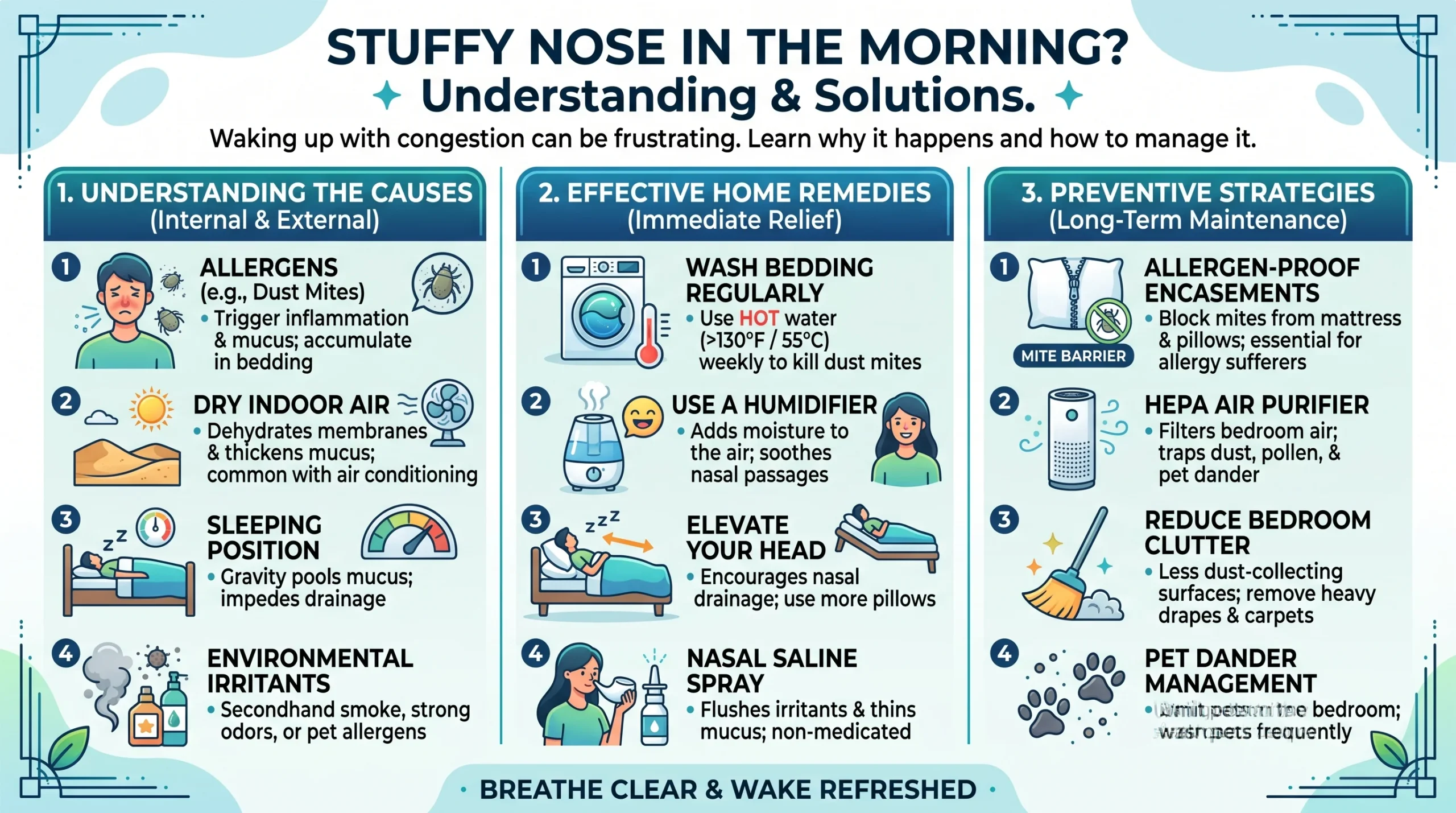
MedlinePlus notes that "congestion is often worse when lying down," and lists keeping upright, or at least keeping your head elevated, among its home care points. That applies whatever the underlying cause. So feeling blocked up on waking doesn't, on its own, point to the pillow. It may simply reflect several hours lying flat.
That's also why the pillow question comes up in two different ways: the pillow as a place allergens collect, and the pillow as the thing that sets your head height.
The pillow as an allergen source: dust mites
The Asthma and Allergy Foundation of America explains in its dust mite allergy guidance (read September 11, 2026) that dust mites feed mainly on flakes of shed human skin, which "work their way deep into fabric items in your home, such as furniture, carpets, bedding (pillow and mattress), and stuffed toys." AAFA lists a stuffy nose among the symptoms of dust mite allergy, calling nasal congestion "one of the most common and troublesome symptoms."
The ACAAI lists dust mites, pet hair or dander, cockroaches and mold as the general causes of perennial allergic rhinitis, the kind that lasts year-round rather than following a pollen season.
That means a pillow can plausibly be one source of exposure for someone with a dust mite allergy. It doesn't mean a stuffy nose proves you have one. Allergy testing is how that gets established, and an allergist is the one to do it.
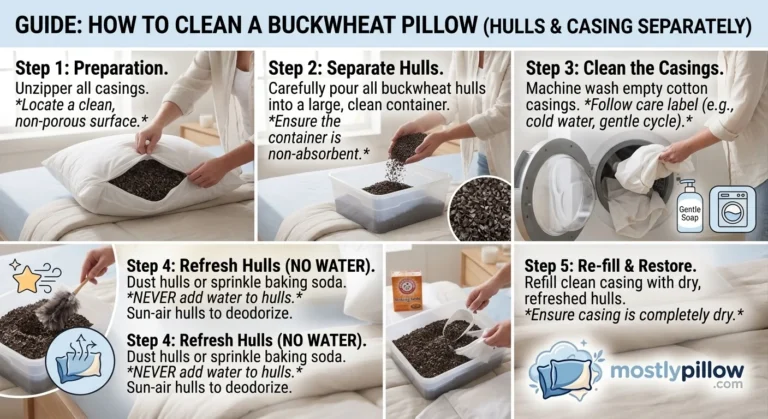
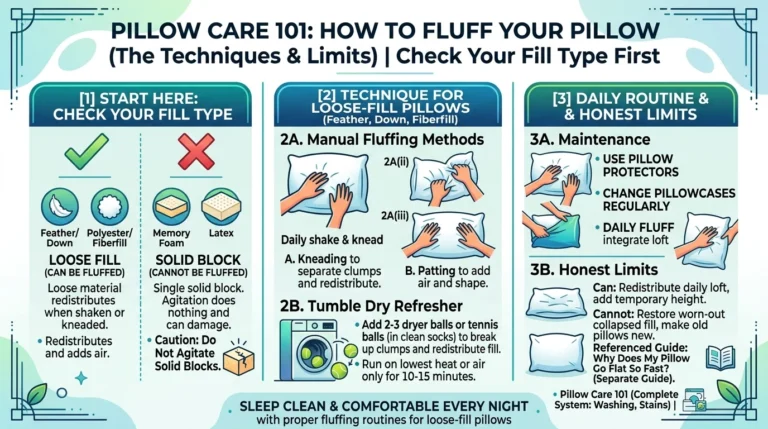
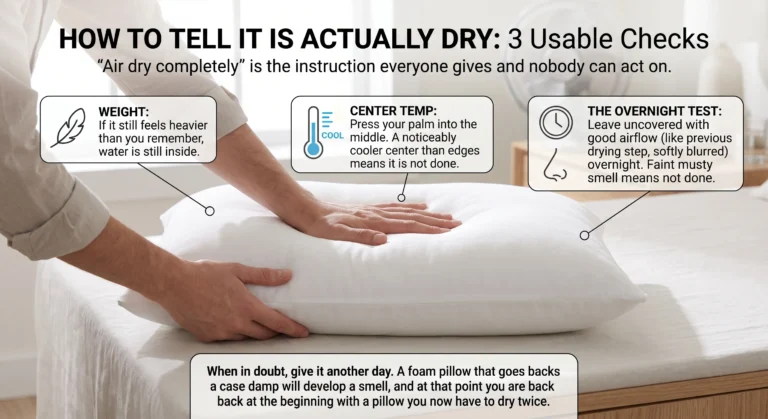
What AAFA lists for reducing dust mite exposure in bedding includes covering mattresses and pillows in zippered allergen-barrier covers, washing sheets and blankets weekly in water at least 130°F, and keeping indoor humidity between 30 and 50%. Many pillows can't be washed that hot, which is why the zippered cover matters most for foam and latex. For the washing side, how to wash pillows in a washing machine explains which fills can go in a machine and how to dry them fully, and Pillow Care 101 sets out the cleaning rules for each fill type.
The humidifier catch nobody mentions
Here's a tension worth knowing about. MedlinePlus lists using a vaporizer or humidifier among its home care points for a stuffy nose. AAFA, meanwhile, says dust mites like humidity levels above 50%, and advises keeping indoor humidity between 30 and 50%.
Those two pieces of advice can pull against each other in a bedroom. A humidifier running all night can push a small room above the range AAFA recommends for dust mite control, especially in a warm room. The two are compatible if humidity stays within that range, and a humidity meter (hygrometer) shows you which side of it you're on. If you're using a humidifier for congestion and also wondering about dust mites, that reading is worth checking, and worth mentioning to your doctor or allergist.
The pillow as head height
Because congestion is often worse lying down, many people pile up pillows to raise their head. MedlinePlus mentions keeping the head elevated but doesn't say how. Stacking pillows is the most common way people do it, and it has a catch: two or three pillows tend to bend your neck forward rather than raising your whole upper body. That can trade one discomfort for another. How to handle head height, and whether elevation is appropriate for you, is a reasonable question to ask your doctor.
Other pillow-related factors, and their limits
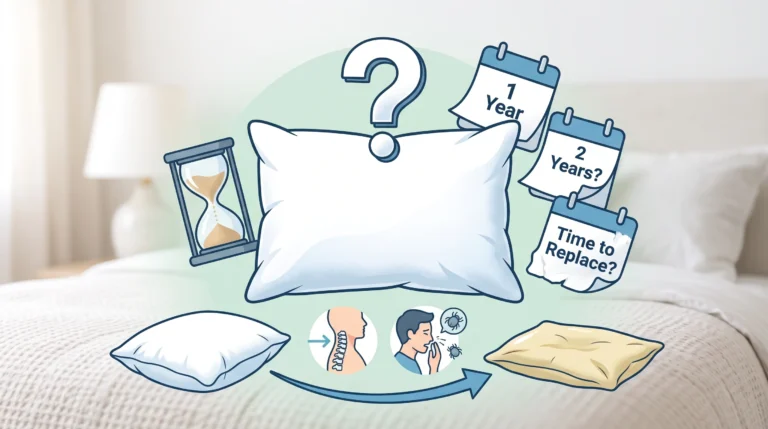
- Pillow age. AAFA suggests replacing pillows every 2 years in its dust mite guidance. An old pillow that's never been washed or covered has had longer to accumulate the skin flakes mites feed on.
- Pets on the bed. The ACAAI names pet hair or dander among the causes of year-round allergic rhinitis. A pet that sleeps on your pillow brings dander right to where you breathe.
- Feather and down fills. People sometimes wonder whether the fill itself is a factor. We didn't find an authoritative source we could cite on this, so we'll leave it where it belongs: it's a question for an allergist, who can test for specific sensitivities.
- "Hypoallergenic" labels. Treat the word as the maker's own description. Look for what it specifically refers to, such as a zippered allergen-barrier cover, and ask your allergist whether that matters for you.
How to notice a pattern (without self-diagnosing)
You can't diagnose yourself from your bedding, but you can gather useful observations for an appointment. Does the congestion change when you sleep somewhere else, with different pillows? Is it better after you've washed your bedding? Is it year-round or seasonal? Does it change when a pet stays out of the bedroom? Notes like these help an allergist, and they're more useful than guessing.
A note for babies
If the question is about an infant, pillows are not the answer. The American Academy of Pediatrics advises keeping soft objects and loose bedding out of a baby's sleep area, including "pillows and pillow-like toys," because they can increase the risk of entrapment, suffocation or strangulation, and states that "any surface that inclines more than 10 degrees isn't safe for your baby to sleep on" (HealthyChildren.org, AAP, read September 11, 2026). For a congested baby, the pediatrician is the person to ask.
FAQ
Can a pillow cause a stuffy nose?
A pillow can be one source of dust mite exposure, and AAFA and the ACAAI both link dust mites to allergy symptoms including a stuffy nose. But MedlinePlus lists many other causes of a stuffy nose, from colds to sinus infections. Only a clinician or allergist can tell whether your pillow is involved.
Should I sleep on two pillows when I'm congested?
MedlinePlus lists keeping your head elevated among its home care points for congestion, without specifying how. Stacked pillows tend to bend the neck rather than lift the upper body, so ask your doctor what kind of elevation suits you.
Are allergen-proof pillow covers worth it?
AAFA lists zippered allergen-barrier covers for pillows and mattresses among its steps for reducing dust mite exposure, describing them as made of material "with pores too small to let dust mites and their waste product through." Whether they're worth it for you depends on whether you have a dust mite allergy, which an allergist can test.
Is it safe to raise my baby's head with a pillow for congestion?
No. The AAP advises keeping pillows out of a baby's sleep area and says any surface inclined more than 10 degrees isn't safe for sleep. Ask your pediatrician about a congested baby.
A pillow can play a part in morning congestion, mostly as a place dust mites collect. It's rarely the only factor, and finding out what's really going on is a job for your doctor or an allergist.