Is Your Pillow the Problem? Troubleshooting Guide
Most pillow problems fall into one of three buckets: the pillow has physically worn out, the pillow was never the right loft or firmness for how you sleep, or the pillow isn't actually the cause at all. Start with the symptom, not the pillow. If you wake up sore and it eases as the day goes on, the pillow is a strong suspect. If the pain is constant, spreads down an arm, or followed an injury, stop reading pillow advice and call a doctor. This page routes you to the right answer for your specific symptom.
How to use this guide
Pillow problems are easier to solve when you separate two questions that get lumped together: "what is wrong" and "is it the pillow's fault." A pillow can be perfectly fine and still be the wrong pillow for you, and a pillow can be genuinely worn out while your sleep position is also part of the problem. Work through the symptom list below, then follow the link to the full guide for that specific issue.
A quick example of how this plays out: someone who wakes up with a stiff neck might assume the pillow is simply old and buy a replacement, only to have the same stiffness return within weeks on a brand-new pillow. That's usually a sign the original problem was fit, not age, meaning the loft or firmness never matched their sleep position in the first place. Running through the symptom pattern first, rather than replacing on instinct, avoids that repeat purchase.
Symptom index: what your problem probably points to
| What you're noticing | What it usually points to | Confidence |
|---|---|---|
| Stiff or sore neck on waking, eases through the day | Loft or support mismatch, or a worn-out pillow | High, this is the most consistently reported pattern |
| Pillow stays folded when you fold it in half, or has a visible dent | Fill has broken down or shifted | High, this is a physical test you can run tonight |
| You've had the same pillow a long time and aren't sure if it's still doing its job | Time-based wear, varies a lot by fill type | Moderate, worth checking against a fold test rather than guessing by age alone |
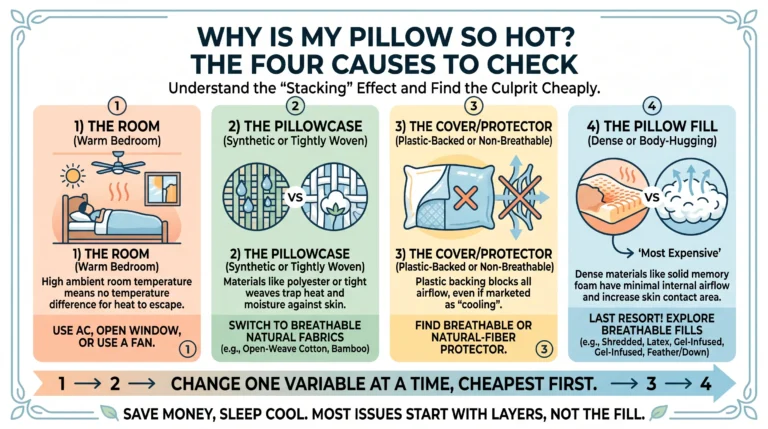
| Waking up hot | Usually the fill or cover material, not necessarily a "bad" pillow | Moderate, often solved by material rather than replacement |
| Pillow slides off the bed or out from under your head | Mechanical: surface, pillowcase fabric, or pillow size | High for the mechanism, low urgency |
| Pain that's constant, doesn't ease during the day, comes with numbness or tingling in an arm, or started after an injury | Not a pillow question | Not something this site, or any pillow, can diagnose |
The most common complaint: waking up sore
Neck and shoulder stiffness on waking is the single most common reason people start suspecting their pillow. The useful diagnostic detail is timing: pain that is present when you wake up and gets better as you move around during the day is the pattern most consistent with a pillow or sleep-position issue. Pain that stays flat all day, gets worse with activity, or radiates down an arm with numbness or tingling is not something a pillow explains, and it belongs with a doctor or physical therapist, not a shopping decision. The full breakdown of what to check, and where the line is, is in Waking Up With Neck Pain: How to Tell If Your Pillow Is the Cause.
Is the pillow worn out, or was it never right?
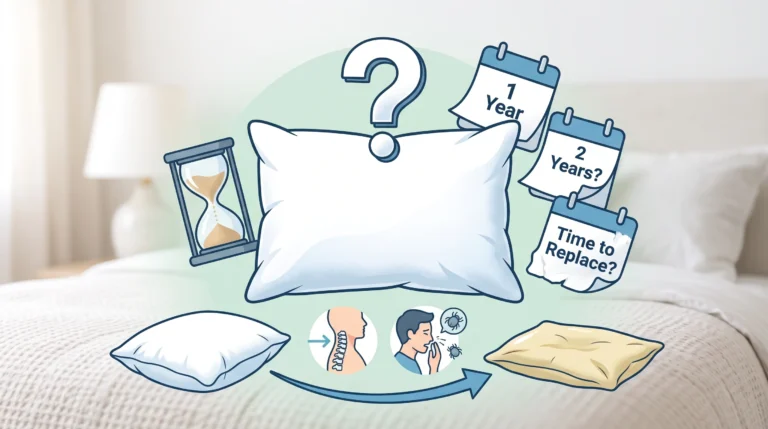
These are two different problems that feel identical from the inside. A worn-out pillow used to work and has physically degraded: the fill has clumped, flattened, or broken down. A wrong pillow may be brand new and still fail you every night, because the loft or firmness never matched your sleep position or body in the first place. The fold test and four other physical checks that tell worn-out apart from wrong are in How to Tell When a Pillow Is Worn Out: The Fold Test and Four Other Checks.
How long a pillow should actually last
There's no single correct number here, and every source that gives you one flat figure is simplifying. The honest answer depends heavily on fill type: foam and latex behave very differently from down, feather, or polyester over time. What the ranges actually are, where they come from, and why they vary as much as they do is covered in How Often Should You Replace Your Pillow?.
Where pillow care fits into this
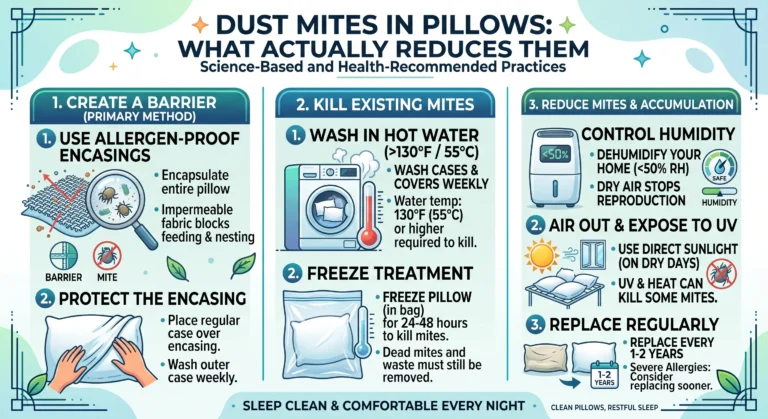
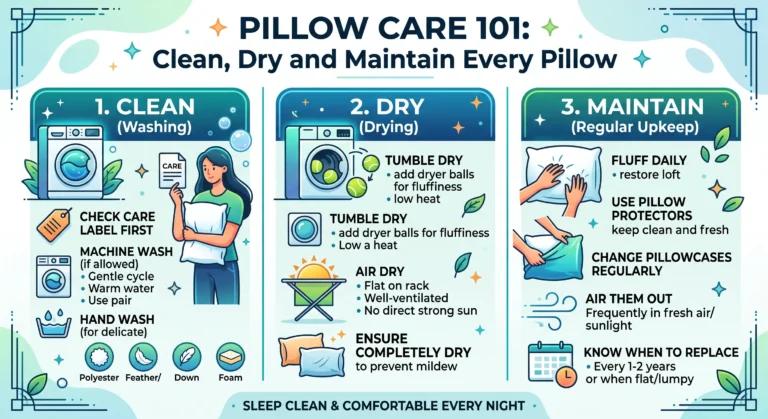
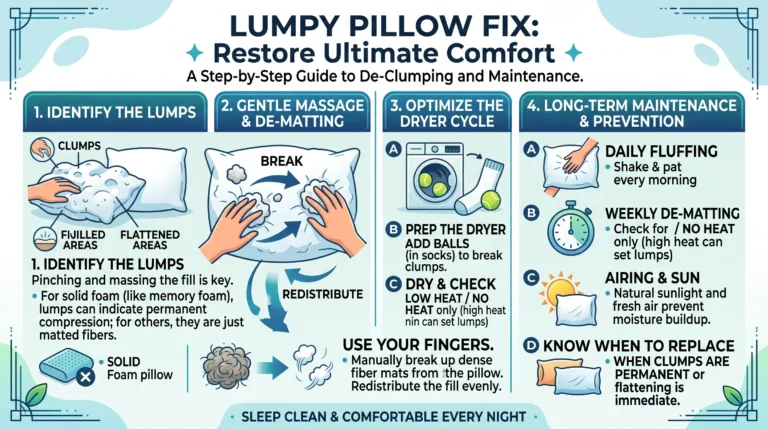
Some of what looks like a "worn-out pillow" problem is actually a maintenance problem. A pillow that has never been washed, has trapped moisture, or has gone flat from ordinary compression can sometimes be revived rather than replaced. Before buying anything new, it's worth ruling this out, since a wash-and-dry cycle costs nothing and a replacement pillow does. Why Does My Pillow Go Flat So Fast? covers the difference between a pillow that can be fluffed back into shape and one that has genuinely reached the end of its life. The full care system, organized by fill type, is the starting point for most of these questions: Pillow Care 101.
Other problems this series will cover
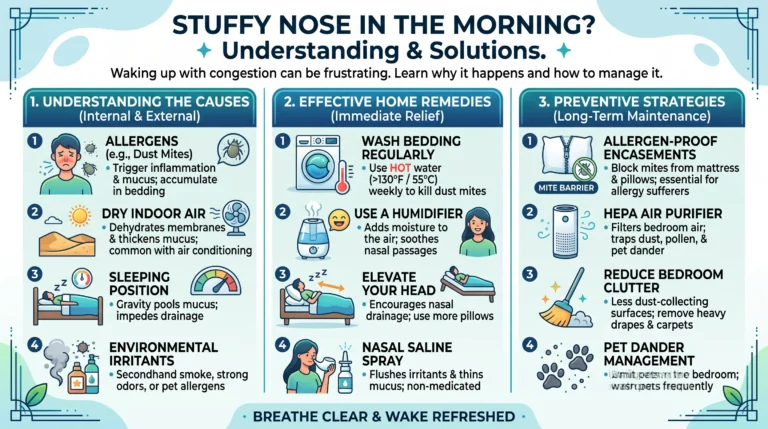
This page will keep expanding as each symptom gets its own full guide. Problems on the list, in roughly the order people search for them, include a pillow that runs hot at night, a pillow that's gone lumpy in specific spots, a pillow that feels too high or too low for your neck, morning congestion that might be dust and allergens rather than a cold, an unfamiliar chemical smell from a new memory foam pillow, and the question of whether it's the pillow or the mattress causing the problem. If the symptom you're dealing with isn't linked yet, it's coming.
When it isn't the pillow
A pillow can only do so much. It cannot fix a herniated disc, arthritis, an old injury, or a sleep disorder, and no honest article about pillows will tell you it can. If pain is severe, persistent regardless of what you sleep on, accompanied by numbness, tingling, or weakness, or started after a fall or accident, that's a medical question, not a pillow question, and the right next step is a doctor or physical therapist rather than a new pillow.
FAQ
How do I know if it's my pillow or my mattress?
Timing and location are the clues. Neck and shoulder pain that's worse on waking points more toward the pillow, since it affects head and neck position specifically. Lower back pain, or pain that's present regardless of which pillow you use, points more toward the mattress. If you're unsure, changing only the pillow first and giving it a couple of weeks is a reasonable way to isolate the variable.
Can a pillow actually cause health problems?
A poorly matched pillow can contribute to muscle tension, stiffness, and disrupted sleep. It is not a medical device and it cannot diagnose or treat an underlying condition. If symptoms are severe or persistent, see a doctor rather than trying to solve it through pillows alone.
My pillow looks fine but I still feel uncomfortable. What's going on?
"Looks fine" and "fits you" are different things. A pillow can be undamaged and still be the wrong loft or firmness for your body and sleep position, which is a fit problem rather than a wear problem.
Should I replace my pillow or try to fix it first?
It depends on what's actually wrong. If the issue is flatness from compression rather than genuine wear, some pillows can be revived through washing, drying, and fluffing. If the fold test shows the fill has broken down, or the pillow has an odor that persists after washing, replacement is usually the more honest answer.