
Neck Pain on Waking: Is It Your Pillow? How to Tell
A pillow is a reasonable first suspect for morning neck pain, but it isn't the only possible cause, and it's important to say plainly upfront: this article cannot diagnose you, and it isn't trying to. Persistent neck pain, pain that comes with numbness or tingling down an arm, pain that started after a fall or injury, or pain severe enough to wake you repeatedly through the night is a question for a doctor or physical therapist, not a pillow decision. What this article can do is describe the pattern that points toward the pillow specifically: pain that is present when you wake up and eases as the day goes on, especially if it started or worsened around the time you changed pillows, mattresses, or slept somewhere unfamiliar like a hotel.
When to stop reading this and call someone instead
Before anything else: if your neck pain includes numbness, tingling, or weakness that runs down an arm, if it followed a fall, a car accident, or any other injury, if it's severe, or if it wakes you up repeatedly through the night rather than just being present in the morning, that's outside what a pillow article can responsibly address. See a doctor or physical therapist. Those patterns can point to a nerve or disc issue that a pillow will not fix, and delaying that conversation to try another pillow first isn't a reasonable trade.
The pattern that actually suggests the pillow
The most consistently useful diagnostic detail, described across sleep and physiotherapy guidance, is timing. Pain that is present or worst right after waking and that noticeably eases as you move around during the day fits a pillow or sleep-position explanation better than a pain pattern that stays constant, or that gets worse with activity. A few other clues worth paying attention to:
- It started or got worse after a change. A new mattress, a new pillow, or even a run of nights in a hotel or on a friend's couch, followed by neck pain that wasn't there before, is a meaningful pattern.
- It's specific to one side or one position. Pain that lines up with how you actually sleep (say, always on one side) points more toward positioning and support than something systemic.
- It's dull and muscular, not sharp or radiating. General stiffness and ache is consistent with muscle tension from a poor sleep position. Sharp, shooting, or radiating pain is not, and is a stronger reason to see a professional sooner rather than later.
Why a hotel bed or a night away can make this obvious
One useful natural experiment happens without anyone intending it: a night or two away from home, on an unfamiliar pillow, followed by noticeably different neck pain than usual. If a hotel or a guest bed consistently leaves you stiffer, or occasionally leaves you noticeably better, than your usual pillow at home, that's a meaningful data point rather than a coincidence. It suggests your regular pillow's loft or firmness genuinely differs from what your neck responds well to, which is worth paying attention to rather than dismissing as "just an odd night."
What Cleveland Clinic says about the mechanism
Cleveland Clinic physician Dr. Chen, discussing pillow-related neck pain, explains that a pillow that doesn't properly support the neck "can cause muscle tension" and "can cause those muscle fibers in your neck and your shoulders to be stretched or placed in an awkward position," which can carry into morning headaches as well as neck stiffness. The mechanism Cleveland Clinic describes is straightforward: your neck is meant to stay roughly in line with the rest of your spine while you sleep, and a pillow that's too high, too low, or too soft to hold its shape all night lets your head tip out of that alignment for hours at a time.
Harvard Health makes a related point in its own guidance on nighttime neck pain: the goal of a pillow is to keep the head, neck and spine in a comfortable, neutral line rather than bent sharply in either direction, and getting that support wrong is a common, correctable contributor to waking up stiff.
What to actually check tonight
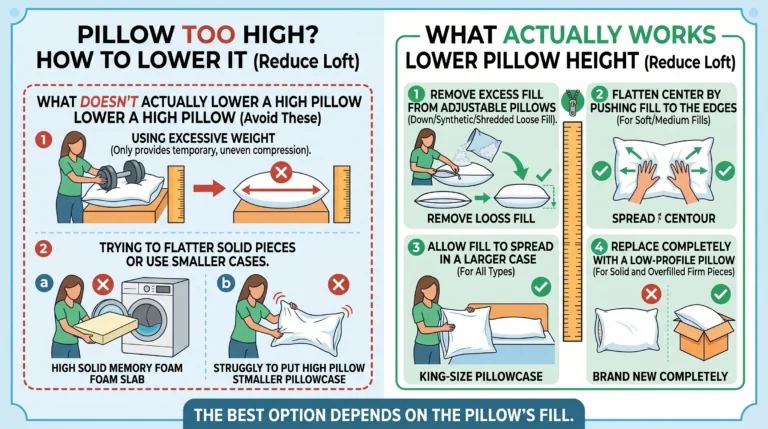
- Loft, front to back. Lying in your normal sleep position, your neck shouldn't feel tipped noticeably up or dropped down. If it does, the pillow's loft doesn't match your position (this differs for side, back and stomach sleepers, since side sleeping needs more loft to fill the gap between shoulder and head than back sleeping does).
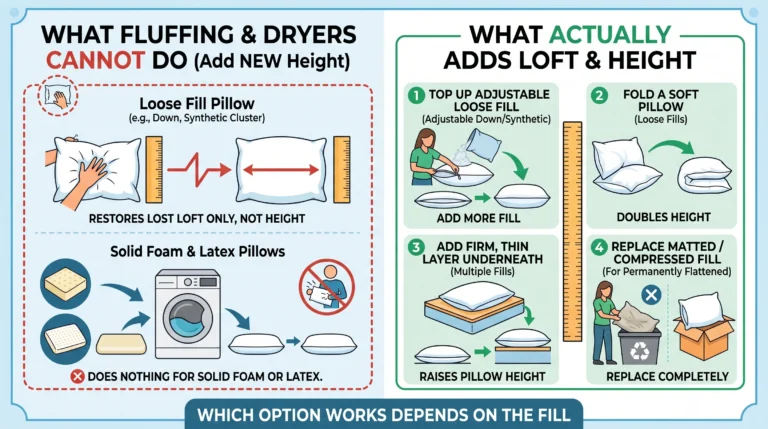
- Whether the pillow holds its shape all night. A pillow that collapses flat under your head part way through the night stops supporting you exactly when you're least likely to notice and adjust.
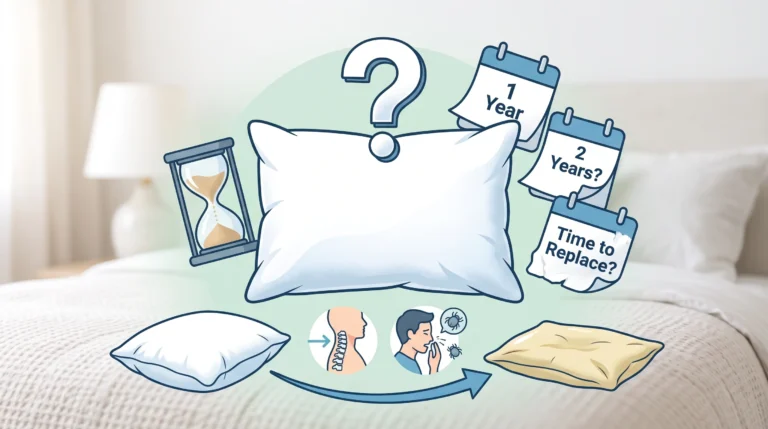
- The pillow's actual condition. A pillow that's genuinely worn out won't hold the loft it's supposed to, regardless of how it was designed. The fold test and other physical checks for this are in How to Tell When a Pillow Is Worn Out.
When it improves with a new pillow, and when it doesn't
If switching to a better-matched pillow noticeably reduces the pain within a couple of weeks, that's a strong sign the pillow genuinely was the issue, or at least a meaningful part of it. If the pain persists at the same intensity after a real trial with a properly fitted pillow, that's the point Dr. Chen's own guidance lands on directly: "if you still notice discomfort or other difficulty after getting a new pillow, it's best to consult with your physician. There may be another issue that needs to be addressed." That's the honest ceiling on what a pillow can do here, and it's worth taking seriously rather than cycling through pillow after pillow hoping one eventually works.
Where this fits into the bigger picture
Neck pain is one symptom among several that can point back to the pillow, and it's worth working through the wider pattern rather than fixating on one fix. Is Your Pillow the Problem? A Symptom-First Troubleshooting Guide routes through the other common complaints, and if the pillow turns out to be old rather than just a poor fit, Pillow Care 101 covers the maintenance side of extending its life.
FAQ
Can a pillow really cause neck pain?
Yes, a pillow that doesn't hold your neck in a reasonably neutral position for hours at a time can contribute to muscle tension and stiffness. It's a common, correctable factor, but it isn't the only possible cause of morning neck pain.
How long should I try a new pillow before deciding it's not working?
There's no fixed number, but a couple of weeks is a reasonable trial period to judge whether a change in pillow is genuinely reducing the pain, rather than judging it after a single night.
Is it normal for neck pain to happen only in the morning?
Pain that's worse on waking and improves through the day is a pattern more consistent with pillow or sleep-position causes than with something more serious, but "normal" isn't the same as "nothing to address." If it persists despite a proper pillow, see a doctor.
When should I see a doctor instead of trying a new pillow?
If the pain is severe, constant rather than easing during the day, comes with numbness or tingling down an arm, started after an injury, or wakes you up repeatedly through the night, see a doctor or physical therapist rather than trying another pillow first.
Does the direction I sleep in matter for neck pain?
Yes. Side, back and stomach sleeping each need a different loft to keep the neck aligned, which is why the same pillow can work well for one person and cause pain for another. Matching loft to sleep position is the core of what a pillow can actually do for neck support.