Dust Mites in Pillows: What Actually Reduces Them
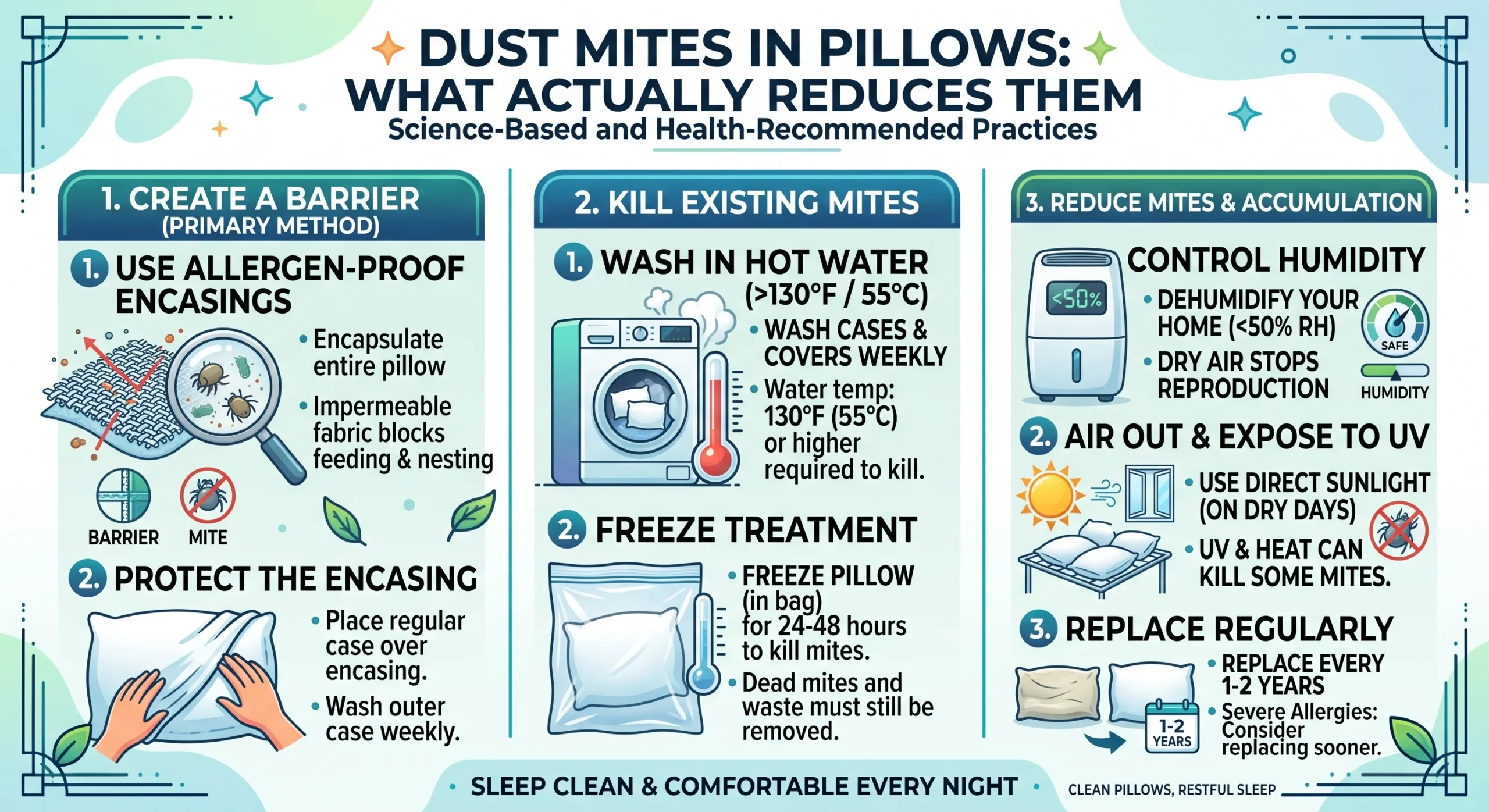
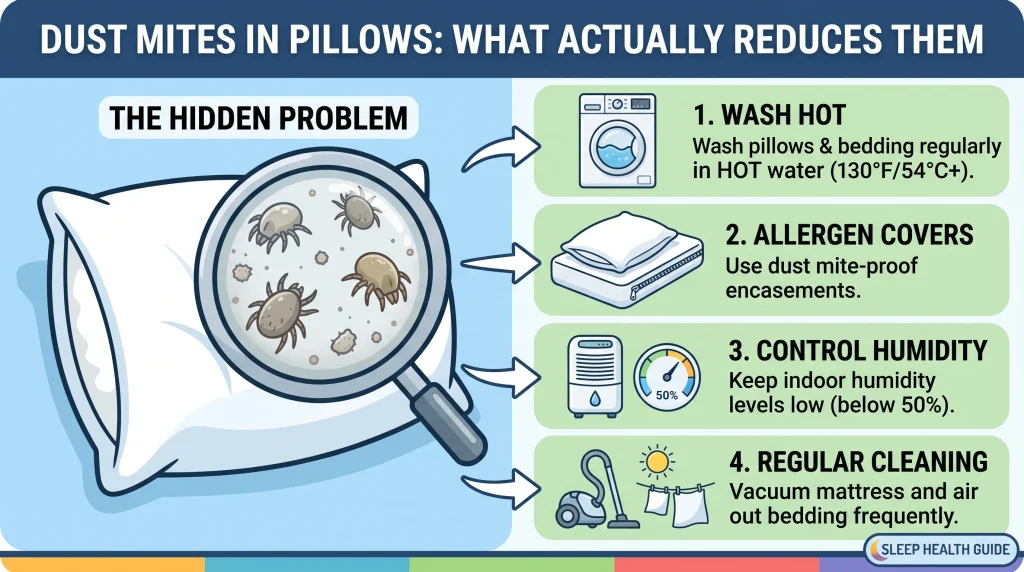
Dust mites end up in pillows because pillows collect the skin flakes they feed on. The Asthma and Allergy Foundation of America’s guidance for reducing them in bedding comes down to four steps: cover pillows and mattresses in zippered allergen-barrier covers, wash sheets and blankets weekly in water at least 130°F, keep indoor humidity between 30 and 50%, and replace pillows every 2 years. The catch is that many pillows can’t be washed that hot, so for foam, latex and some down pillows, the zippered cover does most of the work.
That catch is the part most dust mite advice skips, and it’s the part that decides what you can actually do with the pillow you own.
Why dust mites end up in pillows
AAFA’s dust mite allergy guidance (read September 11, 2026) explains that dust mites “feed mainly on the tiny flakes of human skin that you shed each day,” and that these flakes “work their way deep into fabric items in your home, such as furniture, carpets, bedding (pillow and mattress), and stuffed toys.” AAFA also notes that dust mites like humidity levels above 50%.
A pillow sits under your head for hours every night, collecting skin flakes and absorbing some moisture from your breath and skin. That’s why pillows come up in almost every piece of dust mite guidance.
Who actually needs to act on this
Dust mites matter to you mainly if you’re allergic to them. The American College of Allergy, Asthma and Immunology lists dust mites among the causes of year-round (perennial) allergic rhinitis, and names a stuffy nose due to blockage or congestion as its most common symptom (ACAAI, read September 11, 2026). AAFA lists stuffy nose among the symptoms of dust mite allergy too.
Symptoms alone don’t confirm a dust mite allergy. AAFA says diagnosis starts with your doctor taking a medical history and doing a physical exam, and the ACAAI states that consulting an allergist “is the most effective way to diagnose and treat allergic rhinitis symptoms.” MedlinePlus’s allergic rhinitis page (read September 11, 2026) advises contacting a provider if symptoms are severe, if a treatment that once worked no longer does, or if symptoms don’t respond to treatment.
If you think dust mites are behind your symptoms, an allergist is the place to confirm it. The steps below reduce exposure; they aren’t a treatment, and AAFA itself notes that some people with a dust mite allergy don’t get complete relief from avoidance steps and medicines combined.
Reducing dust mites in pillows: what the guidance says, and where pillows complicate it
| Step (per AAFA) | What AAFA says | The pillow catch |
|---|---|---|
| Zippered allergen-barrier covers | “Cover mattresses and pillows in zippered allergen-barrier covers,” made of material “with pores too small to let dust mites and their waste product through” | A regular pillow protector isn’t necessarily an allergen barrier; it has to be made for that |
| Hot washing | Wash sheets, blankets and throw rugs weekly, “in water that’s at least 130° F or more to kill dust mites” | Many pillows can’t be washed at that temperature, or at all; the care label decides |
| Humidity control | Keep home humidity between 30 and 50%; a dehumidifier and/or air conditioner can help | A humidifier used for dryness or congestion can push a bedroom above that range |
| Replacement | Replace pillows every 2 years | A cover slows buildup in the fill; it doesn’t reset an old pillow |
Zippered allergen-barrier covers: the main lever for pillows
This is the step that works for every fill, including the ones you can’t wash. An allergen-barrier cover encloses the whole pillow under your normal pillowcase. According to AAFA, these covers are made of material with pores small enough to keep dust mites and their waste from passing through.
The word that matters is “barrier.” Plenty of protectors are designed to keep sweat and spills off a pillow, and that’s a different job. When you’re choosing one for dust mites, look for a product that states it’s an allergen barrier and fully encloses the pillow with a zipper, and ask your allergist whether it’s worth it for your situation.
The cover itself goes in the wash along with your pillowcases, per its own care label.
Hot washing: great for sheets and cases, tricky for pillows
AAFA’s washing temperature, at least 130°F, is written for sheets, blankets and throw rugs. Pillowcases fall into that group easily. The pillow itself is a different matter.
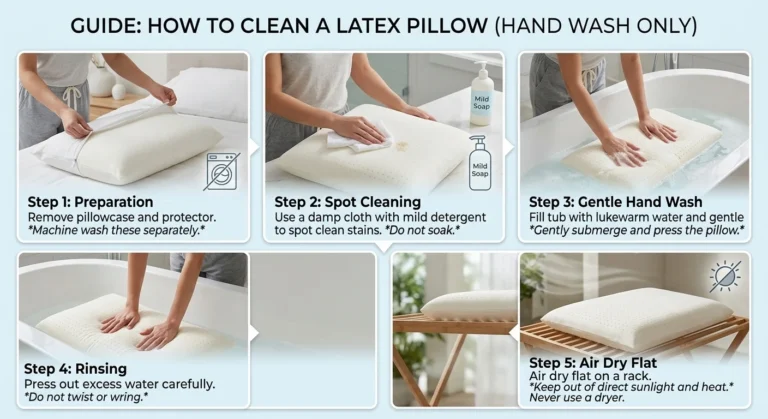
Down, feather and polyester pillows are often machine-washable, but the care label sets the temperature, and it may not allow water that hot. Memory foam and latex generally shouldn’t go in a washing machine at all. That’s why the cover matters so much: it’s the step that doesn’t depend on what the pillow can tolerate.
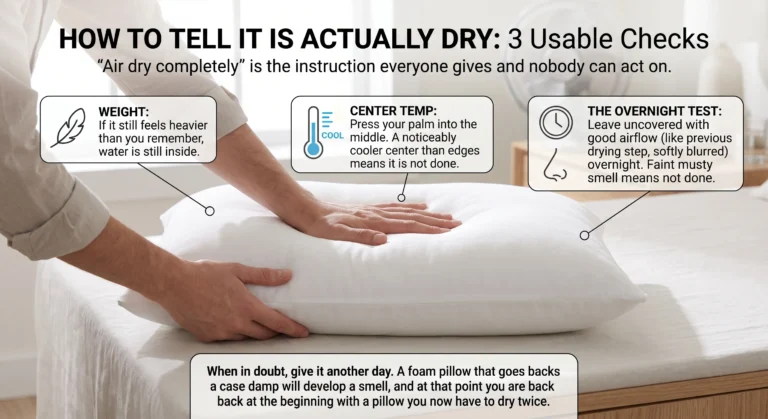
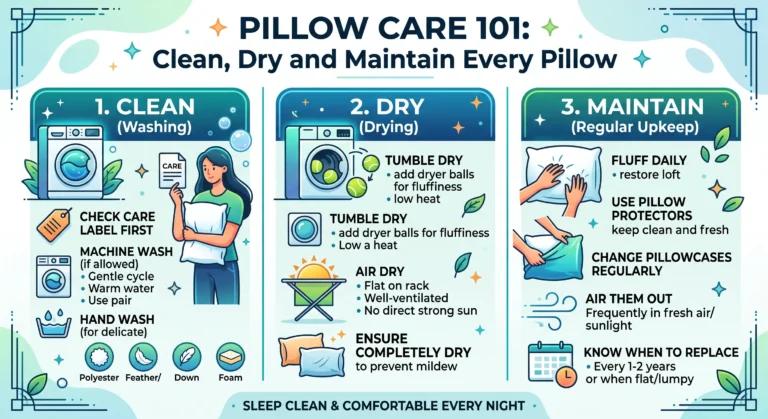
If your pillow can be machine-washed, follow its care label rather than a general temperature, and dry it completely, because a damp core is its own problem. The step-by-step process, including which fills stay out of the machine, is in how to wash pillows in a washing machine. Pillow Care 101 covers the cleaning and drying rules for each fill type.
Humidity: the step people accidentally undo
AAFA advises keeping indoor humidity between 30 and 50% and notes that a dehumidifier and/or air conditioner can help. The bedroom is where this is easiest to get wrong, because it’s where people run humidifiers overnight for dry air or a stuffy nose. A humidity meter (hygrometer) shows you whether the room is staying inside AAFA’s range. If you use a humidifier for other reasons, that reading is worth raising with your doctor.
Replacement: the step a cover can’t replace
AAFA suggests replacing pillows every 2 years. An allergen-barrier cover helps by keeping new material from building up inside, but it doesn’t undo what was already in an older pillow before the cover went on.
What’s missing from the guidance we read
It’s worth being clear about what we checked. On September 11, 2026, AAFA’s dust mite page listed the steps above. It did not mention freezing pillows as a dust mite control method, even though freezing comes up often in general advice. We’re not saying freezing does or doesn’t do anything; we’re saying it isn’t part of the guidance we could cite, so we won’t recommend it.
The same logic applies to anything sold as a quick dust mite fix. If a method isn’t in guidance from an organization like AAFA or the ACAAI, treat the maker’s claim as the maker’s claim, and ask your allergist before relying on it.
What pillow labels do and don’t tell you
Pillow packaging often carries certifications, and it’s easy to read them as allergy claims. They aren’t.
- OEKO-TEX STANDARD 100 means, per OEKO-TEX, that the item “is certified as having passed safety tests for the presence of harmful substances,” tested against a list of more than 1,000 of them (OEKO-TEX, read September 11, 2026). It’s about substances in the textile, not dust mites.
- Fiber content labels. The Federal Trade Commission lists pillows and pillowcases among the bedding products covered by its Textile Act labeling requirements (read September 11, 2026). The label tells you what the pillow is made of, which is what you need to know to check whether it can be washed, but it isn’t a statement about allergens.
- “Hypoallergenic.” Treat the word as the maker’s own description and look for what it specifically refers to, such as a zippered barrier cover.
A realistic routine
Put together, a routine based on AAFA’s list looks like this: a zippered allergen-barrier cover on each pillow, pillowcases washed weekly with your sheets at the temperature AAFA gives (as long as their care labels allow it), the pillow itself washed only as its care label permits and dried completely, bedroom humidity checked against AAFA’s 30 to 50% range, and pillows replaced on AAFA’s 2-year suggestion. If you have allergy symptoms, an allergist can tell you which of these matter most for you.
FAQ
Does washing a pillow kill dust mites?
AAFA says washing bedding in water at least 130°F kills dust mites. Whether your pillow can take water that hot depends on its care label, and foam and latex generally shouldn’t be machine-washed at all. For those, a zippered allergen-barrier cover is the main step.
Do pillow protectors keep dust mites out?
AAFA recommends zippered allergen-barrier covers, made of material with pores too small for dust mites and their waste to pass through. Not every protector is built that way, so check that a product states it’s an allergen barrier.
How often should I replace pillows because of dust mites?
AAFA suggests every 2 years. A barrier cover helps keep new buildup out, but it doesn’t reset an older pillow.
Are foam or latex pillows free of dust mites?
AAFA’s guidance names pillows in general without excluding any fill. Foam and latex can’t usually be hot-washed, which makes a barrier cover especially relevant for them. An allergist can advise on your specific situation.
Most of what reduces dust mites in pillows is unglamorous: a proper barrier cover, hot-washed pillowcases, controlled humidity and pillows that aren’t years past their prime. If allergy symptoms are the reason you’re asking, start with an allergist and use these steps alongside that advice.