How to Get Yellow Stains Out of Pillows
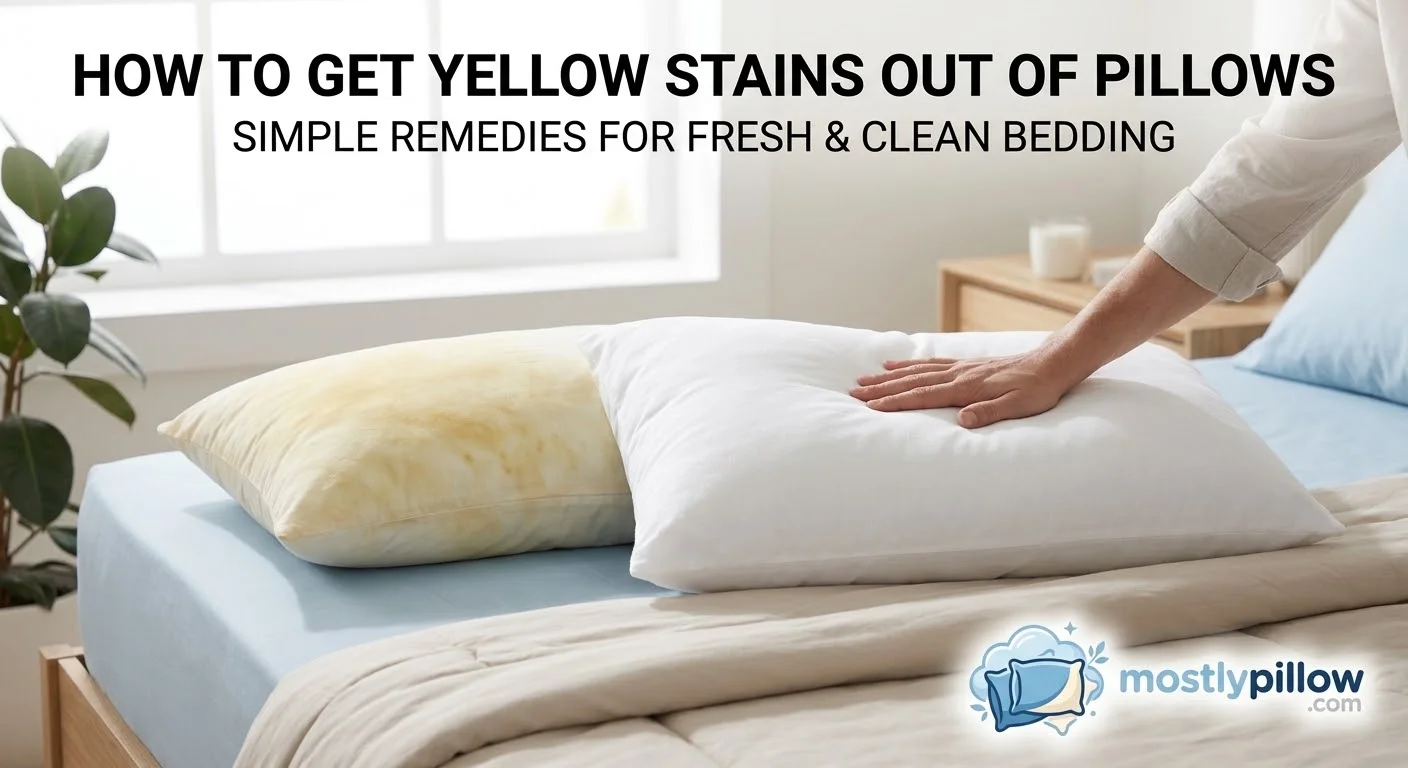
Yellow pillow stains are usually sweat and body oil that have soaked through the pillowcase over time. On a washable pillow, the most commonly recommended approaches are a hot wash with white vinegar, an oxygen-based powder soak, or a spot treatment with diluted hydrogen peroxide. Test any solution on a small hidden area first. Never combine vinegar with a bleach-based detergent, because that can produce chlorine gas. If the pillow is memory foam or latex, do not soak it at all. Older, deeply set yellowing often lightens rather than disappears completely.
What the yellow actually is
Yellowing is sweat and body oil that has gradually soaked through the pillowcase and into the fill over months or years of ordinary sleeping. It is not a hygiene failure and it happens to essentially every pillow eventually. If you want the fuller explanation of why it happens and how to slow it down going forward, that lives in Pillow Care 101; this page covers removal only.
Before you try anything: the safety gate and the fill check
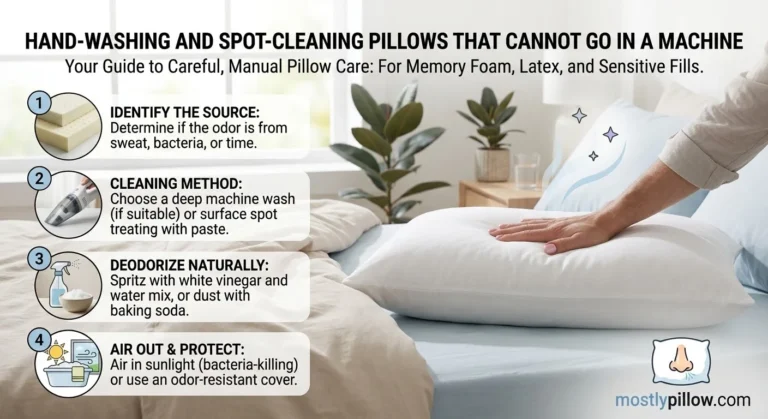
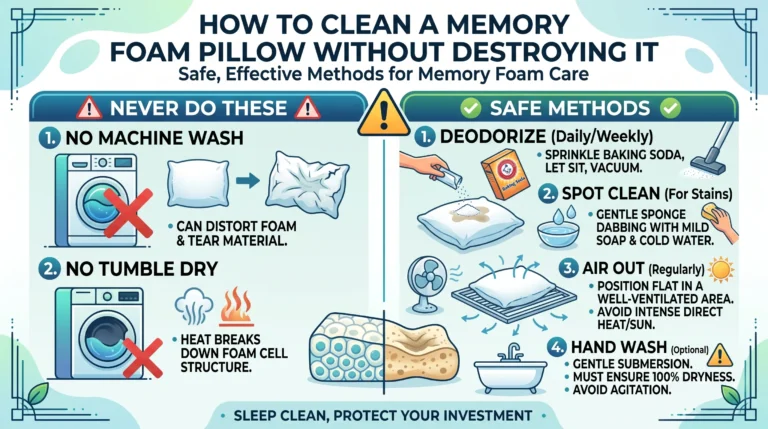
Two checks matter before any method below. First, never combine vinegar with a bleach-based detergent in the same wash or treatment. That combination can produce chlorine gas, and this warning is inconsistently included across cleaning advice, which makes it worth stating plainly here. Second, confirm your pillow can actually be wet-treated at all. Memory foam and latex pillows should not be soaked or run through a wet method; if that is what you have, see How to Wash Pillows in a Washing Machine for what those fills need instead. Always test any solution on a small, hidden area of the fabric first, since fabrics and fills can react differently to the same treatment.
Method 1, the gentlest: oxygen-based soak
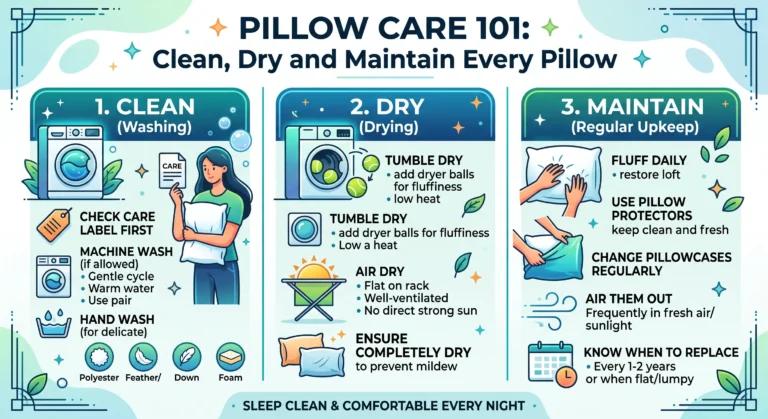
Fill a bathtub or large basin with water and add an oxygen-based cleaning powder according to its own directions, then let the pillow soak for a few hours. This is the gentlest of the four methods here and a reasonable starting point for fresher or lighter yellowing. Wash and dry the pillow as usual afterward, following the no-heat drying guidance in How to Dry Pillows Without Ruining the Fill.
Method 2: hot wash with white vinegar
Add white vinegar to the conditioner compartment of the washing machine and run a hot wash cycle, or mix equal parts white vinegar and water in a spray bottle, apply directly to the stain, and let it sit for about 30 minutes before dabbing it away with a clean cloth. Vinegar's acidity helps break down the sweat and oil residue causing the discoloration. Do not combine this with a bleach-based product, for the reason stated above.
Method 3: spot treatment with diluted hydrogen peroxide
Mix roughly equal parts hydrogen peroxide and water and dab it directly onto the yellowed area rather than saturating the whole pillow. This is a more targeted, more concentrated approach than the first two methods, which makes it a reasonable next step if a gentler method did not fully clear the stain, rather than a first choice.
Method 4: the baking soda and lemon juice paste
Combine lemon juice and baking soda into a paste, rub it gently onto the yellow area, let it sit for about 30 minutes, then rinse thoroughly and allow the pillow to dry completely. This method sits at the more abrasive end of the four and is worth trying after the gentler options rather than before them.
Which method to try first (the escalation order)
Nothing in typical cleaning advice ranks these methods against each other, which leaves the reader guessing. Here is a reasonable escalation order, from gentlest to most targeted.
| Order | Method | When to use it |
|---|---|---|
| 1 | Oxygen-based soak | First try, especially for lighter or all-over yellowing |
| 2 | Hot wash with white vinegar | If the soak does not fully clear it, or for an all-over wash |
| 3 | Diluted hydrogen peroxide | Targeted spot treatment for a stubborn localized patch |
| 4 | Baking soda and lemon paste | Last resort for a persistent, localized spot |
Fill compatibility: which method suits which pillow
Not every method suits every fill, and this is the detail most stain-removal advice leaves out entirely. Matching the method to what is actually inside the pillow matters as much as the method itself.
| Fill type | Soaking methods (oxygen powder, vinegar wash) | Spot methods (peroxide, baking soda paste) |
|---|---|---|
| Down / feather | Fine, but must be dried thoroughly afterward to avoid a musty smell | Fine as a targeted option |
| Cotton / polyester / fiberfill | Fine | Fine |
| Memory foam / latex | Never soak or wash | Spot-dab only, sparingly, and let it air-dry fully before use |
| Buckwheat | Never soak the hulls; casing only, removed and washed separately | Not applicable to the hulls |
If you are at all unsure what fill you are working with, treat the pillow as memory foam or latex for safety, meaning spot treatment only and no soaking, until you can confirm otherwise.
What each method will and will not do
None of these methods are guaranteed to fully remove yellowing, and it is worth saying that plainly rather than implying a perfect result. Fresh discoloration usually responds well to the first one or two methods. Years-old, deeply set yellowing usually lightens rather than clears completely, and that is a realistic outcome, not a sign you did something wrong. If the pillow is also lumpy, flat, or smells unpleasant even after washing, the stain is very likely not the real problem anymore. That is a different question than removal, and it is worth thinking about separately rather than reaching for a fifth stain method.
When the answer is replacement, not cleaning
If a pillow has been through several honest cleaning attempts and the yellowing persists alongside a loss of shape or a smell that will not go away, cleaning has probably done what it can do. Deciding whether that means the pillow is genuinely at the end of its life is a separate question worth working through on its own rather than reaching for a sixth cleaning hack.
Keeping it from coming back
Removal is only half the picture. Yellowing returns because sweat and body oil keep reaching the fill night after night, so the practical prevention step is a washable pillow protector under the pillowcase, plus keeping to a reasonably regular wash schedule rather than waiting until discoloration is visible again. See How Often Should You Actually Wash Your Pillows? for what a reasonable schedule actually looks like and which personal factors push it shorter.
FAQ
Is yellowing on a pillow unhygienic or dangerous?
It is a normal result of sweat and body oil soaking through fabric over time, not a sign of a health problem. It is cosmetic and common, not a safety issue on its own.
Can I mix vinegar and bleach to get a stronger stain remover?
No, never. Combining vinegar with a bleach-based product can produce chlorine gas. Use one or the other, never together.
Will these methods work on a memory foam pillow?
No. Memory foam and latex pillows should not be soaked or run through wet stain-removal methods at all. Those fills need a different, non-soaking approach.
Why didn't the stain fully come out?
Older, deeply set yellowing often lightens rather than disappears completely, even with the right method. That is a realistic outcome of how the residue bonds to the fabric over time, not a sign the method was done wrong.
Should I try all four methods on the same stain?
Start with the gentlest method that plausibly fits your situation and escalate only if it does not work, rather than working through all four at once. Escalating unnecessarily just adds wear to the pillow for no benefit.