How Often Should You Actually Wash Your Pillows?
Most guidance falls between every three months and every six months, and the sources genuinely disagree. Three months is the reasonable target if you sweat at night, have pets on the bed, have allergies, or do not use a pillow protector. Six months is defensible if you use a protector, wash your pillowcase weekly, and the pillow still looks and smells clean. This is a different interval from washing your pillowcase, which is weekly, and from replacing the pillow, which is measured in years.
The short answer, and why the range is a range
There is no single correct number here, and presenting one as settled would be inaccurate. The honestly reported range across guidance is every three to six months, and the spread exists because different sources are answering slightly different underlying questions: how to keep a pillow hygienic, how to make it last longer, or how to manage allergens. All three answers are legitimate, they just are not the same question, which is why the numbers do not line up.
The three different intervals people mix up
Pillowcases, pillows and pillow replacement are three genuinely different timelines, and confusing them is extremely common. One small table resolves the confusion permanently.
| Item | How often | Why it differs |
|---|---|---|
| Pillowcase | About weekly | Directly touches skin and hair oil every night; cheapest and easiest to wash |
| Pillow itself | Roughly every 3 to 6 months | Deeper fill takes longer to accumulate residue and is a bigger wash job |
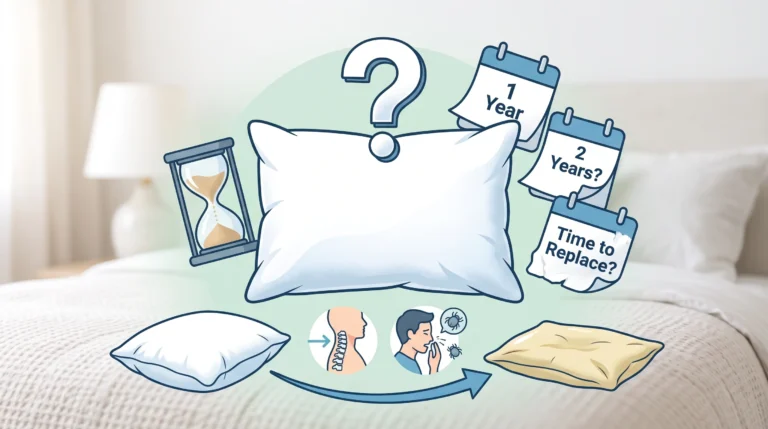
| Whole pillow replacement | Roughly 18 months to a few years, depending on fill | Structural wear, not cleanliness; washing does not fix a worn-out pillow |
Why the guidance varies so much
The disagreement is not sloppiness, it comes from different kinds of sources answering different underlying questions. Appliance and detergent guidance is generally focused on machine safety and getting the wash cycle right, so it tends to state a workable interval without weighing hygiene or allergen exposure heavily. Bedding and mattress-industry guidance tends to be framed around product longevity and comfort, which pulls toward different intervals depending on what protects the product best. Allergy-focused guidance weighs dust and allergen accumulation more heavily, which tends to argue for the shorter end. None of these sources is wrong; they are simply optimizing for different outcomes, and recognizing that is more useful than picking whichever number sounds most authoritative.
What moves you to the shorter end
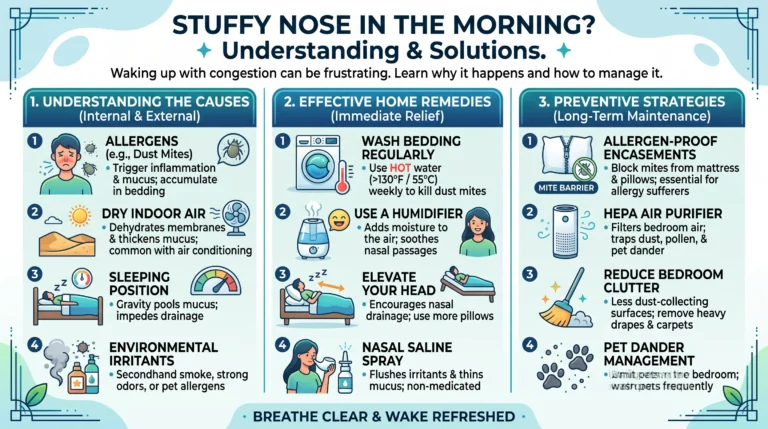
A handful of personal factors reasonably push you toward washing every three months rather than six. Ask yourself honestly: do you sweat heavily at night, do pets sleep on the bed, do you have allergies that make you sensitive to residue and dust, and do you go to bed with damp hair. Any one of these is a reasonable argument for the shorter end of the range, and more than one of them together makes three months the sensible default rather than an overcautious one.
What lets you stay at the longer end
The opposite conditions support staying closer to six months: you use a pillow protector, you wash your pillowcase weekly without skipping, and the pillow still looks and smells genuinely clean rather than merely "probably fine." None of these guarantee six months is correct for you specifically, but together they are a reasonable basis for the longer interval.
The protector effect: the one change that matters most
A pillow protector, a separate zippered layer under the pillowcase, meaningfully changes how often the pillow itself needs a full wash, because it intercepts sweat and oil before they reach the fill at all. This is mentioned only in passing in most guidance, but it is arguably the single highest-leverage change available here: a protected pillow simply accumulates residue more slowly, which is a genuine mechanical reason, not a marketing claim.
What "wash it more often" does not fix
Washing on a shorter schedule keeps residue from building up, but it does not reverse yellowing that has already set in, and it does not restore a pillow that has gone genuinely worn out. If the pillow is already stained, How to Get Yellow Stains Out of Pillows covers removal specifically. If it has lost its shape or support regardless of how often it is washed, that points toward a replacement question rather than a washing-frequency one.
A frequency by fill type note
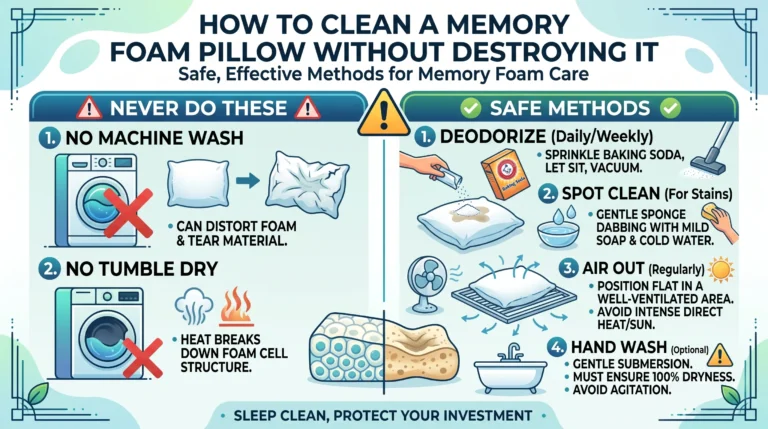
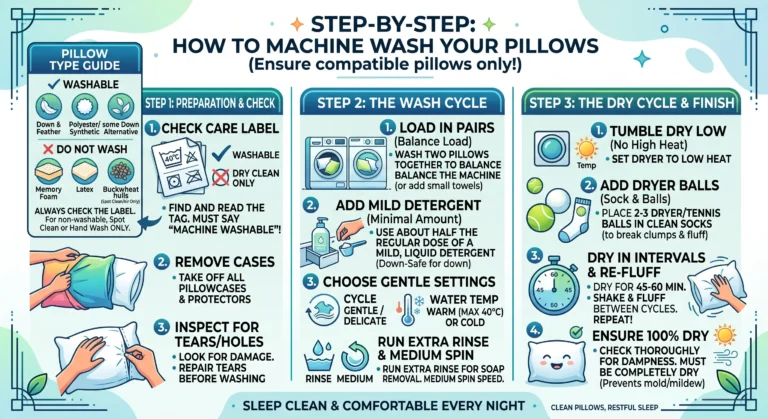
Some fills tolerate frequent washing better than others. Down and feather can handle repeated gentle washing reasonably well if dried thoroughly each time. Polyester and fiberfill are generally forgiving too. Memory foam and latex are not machine washed at all, so the frequency question looks different for them entirely; see How to Wash Pillows in a Washing Machine for the fill-by-fill breakdown of what each material can handle.
Building it into a routine you will actually keep
The most reliable schedule is one tied to something you already do rather than a date you have to remember. Pairing a pillow wash with a seasonal changeover, like putting on and taking off a mattress topper, or with a fixed calendar point like the start of a season, tends to actually happen where an abstract "every four months" reminder does not. Washing two pillows at once, one from each side of the bed, also means the whole household stays on the same schedule rather than drifting apart over time.
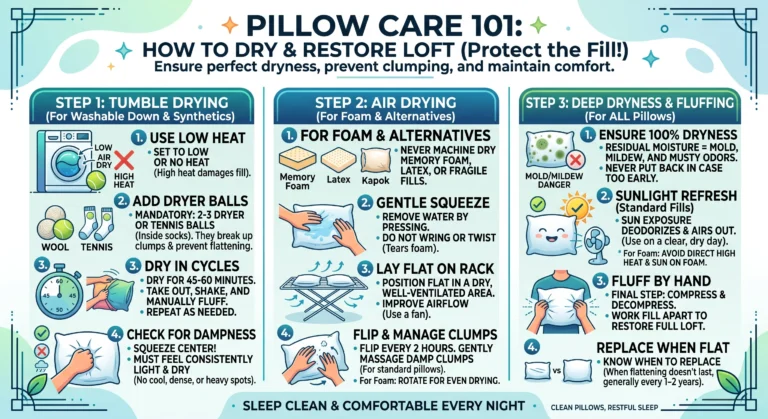
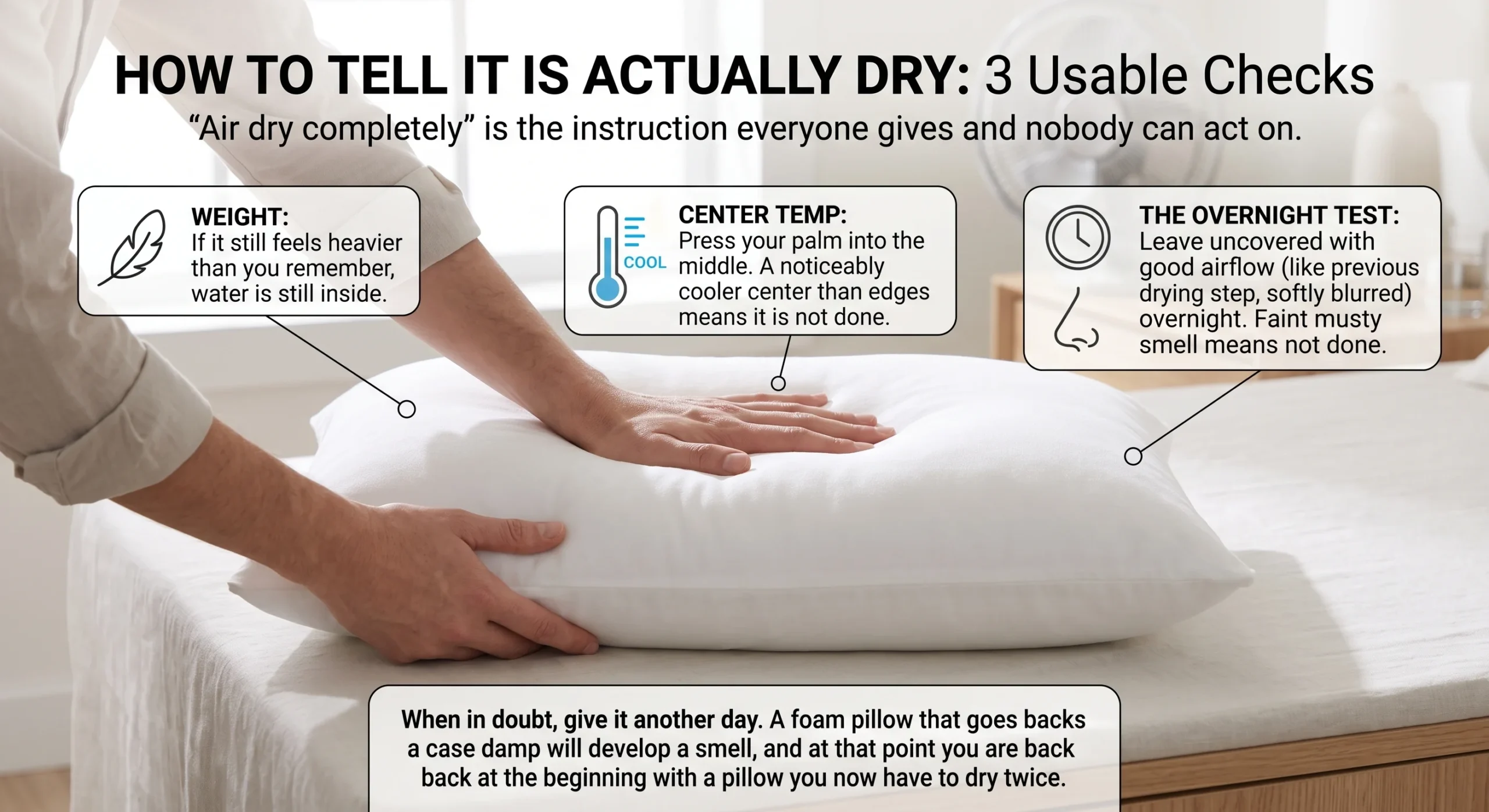
A simple way to keep the three intervals straight without a calendar reminder for each one: change the pillowcase on the same day as the rest of the bedding each week, wash the pillow itself at each seasonal changeover, and only think about replacement when the fold test or a persistent problem raises the question, rather than on a fixed date. The full washing method itself, including what to do without a care label, is in How to Wash Pillows in a Washing Machine, and the drying step that determines whether the wash was worth doing is in How to Dry Pillows Without Ruining the Fill.
FAQ
Is there one correct number for how often to wash pillows?
Not really. Reputable guidance ranges from every three to six months, and the disagreement comes from sources answering slightly different questions about hygiene, longevity and allergens. Pick a point in that range based on your own factors rather than searching for a single settled answer.
Does using a pillow protector actually reduce how often I need to wash the pillow?
Yes, meaningfully. A protector intercepts sweat and oil before it reaches the fill, which slows how quickly residue builds up inside the pillow itself.
Is washing my pillowcase enough, or do I need to wash the pillow too?
Both matter, on different schedules. The pillowcase should be washed weekly since it touches skin directly. The pillow itself still needs a deeper wash every three to six months, because residue reaches the fill underneath the case over time.
What if I have allergies? Should I wash more often than the general range?
Yes, allergies are one of the clearest reasons to lean toward the shorter end of the range, around every three months, rather than the longer end.
Does washing my pillow more often make it last longer?
It helps somewhat by preventing residue buildup, but frequency alone will not extend a pillow past its natural lifespan or reverse structural wear. Washing and replacement are related but separate questions.