Polyester Pillow Pros and Cons: What You Actually Get
Short answer: the polyester pillow pros and cons come down to cost against lifespan. Polyester and microfiber pillows are inexpensive, light, soft, free of animal material and usually machine washable. In exchange, the fiber tends to clump and flatten sooner than other fills, it can feel warm, and it is made from plastic. "Microfiber" is not a different material, just finer polyester. And the common claim that synthetic pillows suit allergy sufferers is contradicted by several studies on dust mite allergen.
Polyester fiber is the default pillow in most homes, hotels and guest rooms. That makes it worth knowing exactly what you are getting and what you are trading away. This guide covers both, without recommending any product.
What "polyester" and "microfiber" mean on a pillow label
A polyester pillow is a fabric shell stuffed with loose polyester fiber, sometimes called fiberfill, polyfill or cluster fiber. Polyester is a manufactured fiber. The US Federal Trade Commission's list of generic fiber names, set out in its textile rules at 16 CFR 303.7 (read September 27, 2026), defines polyester as "a manufactured fiber in which the fiber-forming substance is any long chain synthetic polymer composed of at least 85% by weight of an ester of a substituted aromatic carboxylic acid."
"Microfiber" is not on that list of generic fiber names. On a pillow, it usually describes polyester spun into much finer strands. Finer strands feel softer and pack more closely, so a microfiber pillow tends to feel smoother and more down-like than a standard fiberfill pillow. But the fiber underneath is still, in most cases, polyester. When you compare two pillows, "microfiber" versus "polyester" is a question of fiber fineness and construction, not of different materials.
You may also see "down alternative." That is a description of the feel the maker is aiming for, not a fiber name. Most down alternative pillows are filled with polyester in some form.
Polyester pillow pros and cons at a glance
| Pros | Cons | |
|---|---|---|
| Cost | Usually the least expensive fill | Shorter useful life can erase the saving |
| Feel | Soft and squashable; microfiber feels close to down | Loses loft and clumps as the fiber mats |
| Weight | Light and easy to move | Can shift inside the shell |
| Washing | Most can go in a washing machine | Fill can bunch up after washing if not dried fully |
| Allergies | No animal down or feathers | Studies found more dust mite allergen in synthetic pillows than feather |
| Temperature | Breathable shells help | Often described as warmer than natural fills |
| Materials | No animal products | Made from plastic; not biodegradable |
The pros, explained
Low cost
Polyester fiber is cheap to produce, which is why it fills most budget pillows. For a guest bed, a child's first pillow, or anyone who prefers to replace pillows often, that low cost is a real advantage.
Soft, familiar feel
A polyester pillow compresses easily and can be folded or bunched to change its height. Microfiber versions in particular are designed to imitate the soft, squashy feel of down. For people who find memory foam too slow or latex too springy, this familiar feel is the main appeal.
Machine washable, usually
Most polyester pillows can go in a home washing machine, which is not true of solid memory foam or latex. Always check the care label first, since some are made to be spot cleaned only. Our step-by-step guide to washing pillows in a washing machine covers settings and loading, and drying matters just as much: our guide on how to dry pillows without ruining the fill explains why fiber that is put away damp clumps and smells.
No animal material
Polyester contains no feathers or down, which matters to people who avoid animal products and to anyone who has been told by a doctor to avoid feather bedding.
The cons, explained
It flattens and clumps
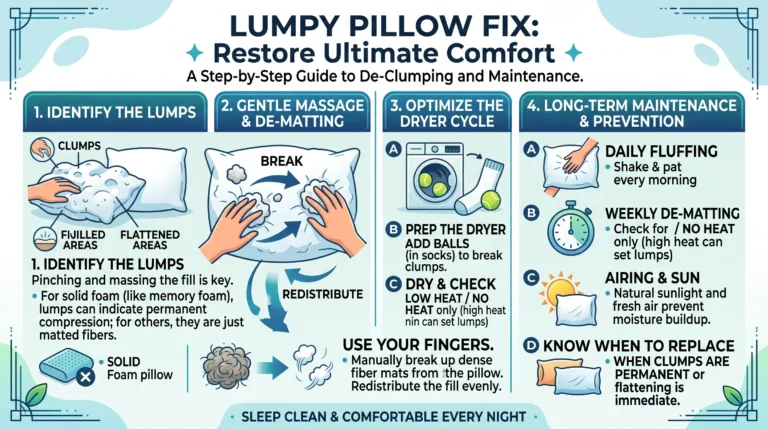
Over time, polyester fibers mat together and the pillow loses height and springs back less. You will notice lumps you can feel through the case and a pillow that needs folding to feel supportive. Fluffing helps for a while. Our guide on how to fluff a pillow explains what fluffing can and cannot bring back.
This is the core trade-off. A cheap pillow that needs replacing more often may not be cheaper in the end. Sources that publish lifespan figures for polyester disagree widely, so we have not quoted a single number here. Our guide on how often to replace your pillow covers the signs that a pillow is done, which are more useful than a calendar date.
It can feel warm
Polyester fiber does not absorb moisture the way wool or cotton do, and many sellers of other fills describe synthetic pillows as warm. We found no independent measurement to put a number on that. Breathable cotton shells and pillowcases help, and hot sleepers may notice the difference more than others.
It is plastic
Polyester is made from petroleum-based chemicals, and an old polyester pillow will not break down the way a natural fill can. For some buyers, that alone is the deciding factor.
The allergy claim: where the labels and the studies part ways
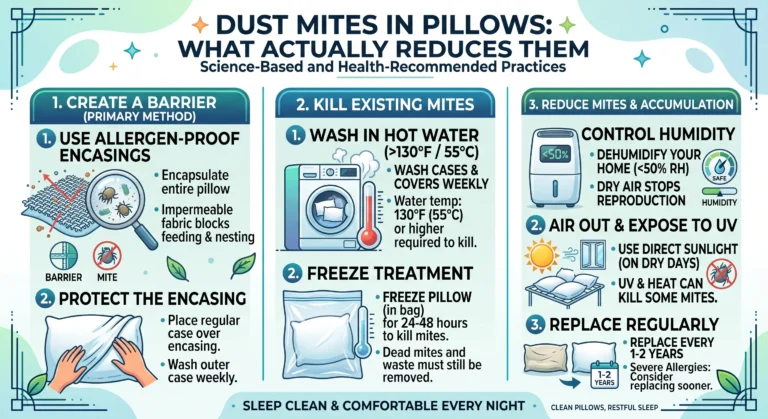
Synthetic pillows are often sold as the better choice for allergy sufferers. The reasoning is that they contain no feathers. That is true, but feathers are not the main allergen in most pillows. House dust mites are, and several studies have found synthetic pillows collect more mite allergen than feather ones.
One research group looked at this over several years. In a 1999 study in Clinical and Experimental Allergy, Rains, Siebers, Crane and Fitzharris put pairs of new synthetic and new feather pillows together on 12 beds and measured the main dust mite allergen, Der p 1, for a year. After 12 months, the synthetic pillows averaged 19.28 micrograms per gram against 6.45 on the feather pillows. The authors concluded that "synthetic pillows accumulate Der p 1 more rapidly than feather pillows." The same group had earlier published a letter in the BMJ titled Increased house dust mite allergen in synthetic pillows may explain increased wheezing (1997, read September 27, 2026).
These are small studies, and one pillow type is not automatically right or wrong for any individual. The honest takeaway is narrower: "no feathers" and "good for allergies" are not the same thing. The pillow's cover, how often it is washed, and whether it sits inside a protector may matter as much as the fill. Anyone with asthma or allergies that seem worse in bed should ask a doctor or allergist, rather than rely on a label.
Standard polyester vs microfiber vs cluster fiber
Within polyester pillows, the construction changes the feel more than the fiber does:
- Standard fiberfill. Thicker strands in a continuous batt. The cheapest and firmest to the touch, and the quickest to form lumps.
- Microfiber. Very fine strands. Softer and closer to down, but can compress flatter.
- Cluster fiber (sometimes called ball fiber). Fiber rolled into small clusters that move independently. Designed to resist clumping and to be reshaped by fluffing.
- Shredded or loose fill with a zipper. Some polyester pillows let you add or remove fill to change the height.
None of these names is standardized, so treat them as the maker's description. The pillow's weight of fill and its height tell you more about how firm it will be.
Who a polyester pillow suits, and who it does not
A polyester or microfiber pillow tends to suit people who:
- want a soft, squashable pillow at a low cost
- want to wash the whole pillow at home
- avoid animal products
- are furnishing a guest room that sees occasional use
It tends to suit less well people who:
- want one pillow to last for years
- sleep hot and are bothered by it
- prefer firm, steady support that does not shift
- have allergies and assumed synthetic meant allergy-safe, without checking with a doctor
FAQ
What are the main pros and cons of a polyester pillow?
Pros: low cost, soft feel, light weight, usually machine washable and free of animal material. Cons: clumps and flattens sooner than many fills, can feel warm, and is made from plastic.
Is microfiber the same as polyester?
Usually, yes. "Microfiber" is not a generic fiber name in the FTC's textile rules. On pillows it normally means polyester spun into very fine strands, which feel softer.
Are polyester pillows good for allergies?
Not automatically. A 1999 study in Clinical and Experimental Allergy found new synthetic pillows built up more dust mite allergen over a year than feather pillows on the same beds. Ask a doctor or allergist if allergies are a concern.
Can you put a polyester pillow in the washing machine?
Most can, but check the care label first. Drying the fill completely is what keeps it from clumping.
Why does my polyester pillow go lumpy?
The fibers mat together over time and with washing, especially if the pillow is not fully dried. Fluffing helps for a while; lasting lumps usually mean the pillow is near the end of its life.
A polyester pillow is a fair deal when you know what you are buying: soft, cheap and washable, with a shorter life and an allergy claim that deserves a second look.