How to Store Pillows Without Them Going Musty
A pillow comes out of storage musty for one main reason: it went in with some moisture still in the fill, or it was sealed in an airtight container in a space with no airflow. Make sure a pillow is completely dry before you store it, use a breathable storage option rather than a fully sealed plastic bag where possible, and store in a dry, temperature-stable spot rather than a damp basement or an un-vented attic. Checking on stored pillows occasionally, rather than sealing them away for a year untouched, catches a developing problem early. This is one piece of a larger routine; the complete pillow care system by fill type is in Pillow Care 101.
Why stored pillows come out musty
The mechanism is straightforward once you name it: mildew and mold need moisture and a lack of airflow to develop, and storage is exactly the situation that provides both if you're not careful. A pillow that goes into a bin or bag with even a small amount of residual moisture in the fill, combined with a sealed, unventilated space, gives that moisture nowhere to go. Over weeks or months, it sits there instead of evaporating, and that's the setup mildew needs.
This is a prevention problem, not a mystery, and it's also a different problem from a pillow that's musty because it was never properly cleaned in the first place. If a pillow already smells before you store it, storing it correctly won't fix that; How to Get Smells Out of a Pillow covers removing an existing odor before storage is even the right next step.
Before you store: make sure it is completely dry
This is the single most important instruction on this page. A pillow that goes into storage even slightly damp, whether from a recent wash that didn't fully dry, humidity in the air, or a quick spot-clean that wasn't given time to air out, carries exactly the moisture that mildew needs, and a sealed storage space won't let that moisture escape on its own.
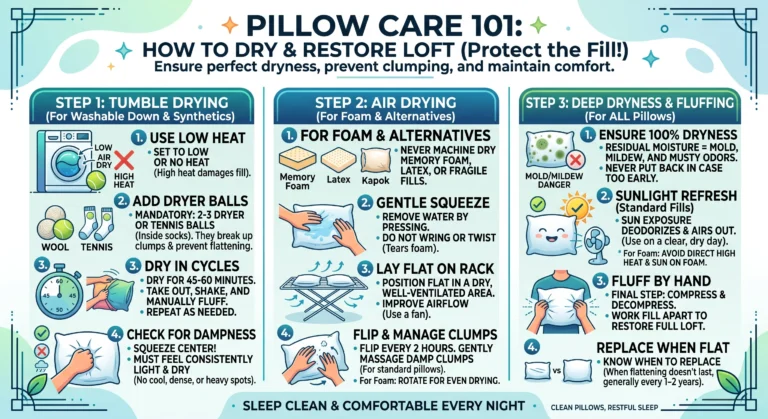
Check more than the surface. A pillow can feel dry to the touch on the outside while the fill at the core is still damp, especially with denser fills like down clusters or thicker foam. How to Dry Pillows Without Ruining the Fill covers how to confirm a pillow is genuinely dry all the way through, not just on the surface, which is exactly the check that matters before storage. If there's any doubt, give it more time to air out rather than storing it and hoping.
What to store pillows in (breathable options vs sealed plastic, as categories)
The container matters because it determines whether any residual moisture, however small, has somewhere to go. A breathable storage option, such as a cotton or canvas storage bag, or a container with actual ventilation, lets trapped moisture continue to escape gradually even after the pillow is packed away. A fully sealed plastic bag or airtight bin does the opposite: it holds whatever moisture is present inside the pillow, with no way out, which is exactly the condition mildew needs if the pillow wasn't completely dry to begin with.
This doesn't mean plastic storage is always wrong. A pillow that's genuinely, fully dry stored briefly in a plastic bin for protection from dust or pests is a different situation from a pillow stored damp in a sealed bag for months. The risk scales with how much moisture is actually present and how long the container stays sealed, so a breathable option is the safer default, especially for longer storage periods.
Where to store them: humidity and temperature matter more than space
Where a pillow is stored matters more than what it's stored in. A dry, temperature-stable spot, like a linen closet or a bedroom closet, works against mildew regardless of container choice, because there's less ambient moisture in the air to begin with. A damp basement or an unventilated attic works against you no matter how good the container is, because the surrounding air itself is humid, and that humidity can work its way into even a well-sealed container over time, or simply keep a container's interior from ever fully equalizing.
If a dry indoor spot isn't available and a basement or attic is the only option, a container with better ventilation and, where possible, a way to check the space's humidity becomes more important, not less.
Adding moisture protection to the storage space
For borderline spots, a few small additions reduce risk without much effort. A moisture-absorbing packet placed near or inside a breathable storage bag helps manage the small amount of residual humidity in the air around the pillow. Keeping stored pillows off a basement or garage floor, rather than directly on concrete, reduces exposure to ground moisture and cooler surface temperatures where condensation is more likely to form. None of this replaces starting with a completely dry pillow and a reasonably dry storage location; it's a supplement for spaces that aren't ideal, not a fix for one that skips the basics.
Short-term seasonal storage vs long-term storage
A guest pillow going into a closet for a few weeks between visits carries less risk than a set of pillows packed away for an entire off-season or longer. The moisture risk compounds with time: a small amount of residual dampness that would have simply evaporated harmlessly over a couple of weeks has much longer to cause a problem across several months in a sealed container. For anything stored longer than a season, the drying step before packing and the breathable-container choice both matter more, not less, and an occasional check-in (below) becomes genuinely worthwhile rather than optional.
Checking on stored pillows, and what to do if you find a musty one
Most storage advice treats packing a pillow away as a one-time task: dry it, pack it, done. That's how a small, easily caught moisture problem turns into a fully musty pillow by the time anyone opens the container again. An occasional check, even just opening the container and giving the pillow a quick smell every so often during a long storage period, catches a developing problem while it's still minor.
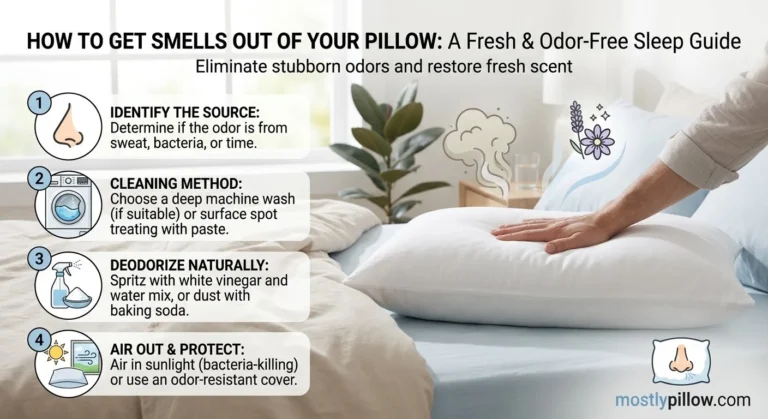
If you do find a pillow that's come out musty, the fix at that point is odor removal, not storage advice; How to Get Smells Out of a Pillow covers that directly. If the pillow was recently washed and went straight into storage before this happened, Why Does My Pillow Smell After Washing It? covers the closely related case of incomplete drying showing up as odor, which is the same underlying mechanism driving most musty-storage outcomes too.
FAQ
Is it okay to store pillows in a vacuum-sealed bag?
Only if the pillow is completely dry first, and even then, briefly is safer than long-term. Vacuum sealing is an airtight environment, so any residual moisture has nowhere to go, and it also compresses fill, which some materials don't recover from well after extended compression.
How long can a pillow stay in storage before it needs checking?
There's no fixed interval, but an occasional check during any storage period longer than a few weeks is a reasonable habit. The point is catching a developing problem early rather than opening a sealed container after months with no idea what's inside.
Can I store a pillow in the attic or basement?
You can, but both are higher-risk locations because of humidity and temperature swings. If that's the only available space, prioritize a breathable container, keep the pillow off the floor, and check on it more often than you would with an indoor closet.
Does the type of pillow fill change how it should be stored?
The core rule, completely dry and breathable storage, applies across fill types. Denser fills like down or foam can take longer to fully dry at the core, so it's worth extra care confirming dryness before storing those specifically.
My stored pillow smells musty. Do I need to throw it away?
Not necessarily. A musty smell from storage is usually an odor problem rather than structural damage, and How to Get Smells Out of a Pillow covers removal methods. If the smell persists after treatment, or the pillow shows visible mold, replacement is the safer call.