Pillow Damp in the Morning? Sweat, Drool or Humidity
Short answer: a pillow damp in the morning is usually getting moisture from one of four places: sweat, saliva, a humid bedroom, or condensation in a cold room. Where the damp patch sits and how it feels tell you which. A patch by your mouth points to drool. A broadly damp pillow plus damp sheets points to sweat. A pillow that is damp even when nobody slept on it points to the room. Most causes are harmless and fixable at home, but night sweats that are regular, drenching or come with other symptoms are a reason to see a doctor.
The health part comes first, because it is the one that matters most. Then the method for telling the four causes apart.
First: when damp means see a doctor
Sweating at night because the room or the bedding is too warm is normal. The NHS page on night sweats (last reviewed November 9, 2023, read September 25, 2026) makes that distinction, and lists the times to see a GP:
- "you have night sweats regularly that wake you up or worry you"
- "you also have a very high temperature (or feel hot, cold or shivery), a cough or diarrhoea"
- "you have night sweats and you're losing weight for no reason"
The same page lists the most common reasons for night sweats as menopause symptoms, anxiety, some medicines (it names some antidepressants, steroids and painkillers), low blood sugar, alcohol or drug use, and a harmless condition called hyperhidrosis that makes you sweat too much all the time.
We cannot tell you which, if any, applies to you. If your pillow is soaked with sweat and any of the NHS points above fit, a doctor is the right next step, not a new pillow. The same goes for heavy drooling that is new, or that comes with trouble swallowing or other changes: that is a question for a doctor or dentist.
Everything below assumes the damp is the ordinary kind.
The four sources of a damp pillow
A pillow is a fabric sponge a few inches from your face for seven or eight hours. Moisture reaches it from:
- Sweat. Your head and neck sweat into the pillow, more so in a warm room, under heavy bedding, or on a pillow that holds heat.
- Saliva. Drool usually leaves a patch near where your mouth rests, most often for side and stomach sleepers, and more often when a blocked nose means breathing through the mouth.
- Room humidity. In humid air, fabric and fill take up moisture, and sweat evaporates more slowly, so it stays in the pillow instead of drying off overnight.
- Condensation. Warm, moist breath meeting a cold surface can leave dampness, especially on a pillow pushed against a cold outside wall or window in winter.
Wet hair at bedtime is a fifth, obvious one. If you shower at night, rule it out before anything else.
How to tell which one you have
This is the part most pages skip: they list causes, but not how to separate them. The damp patch itself is the evidence.
| What you notice | Most likely source | What it suggests |
|---|---|---|
| A distinct patch where your mouth rests, sometimes with a faint ring when dry | Saliva | Sleeping position or mouth breathing |
| The whole pillow is warm and damp, and so are your sheets or pajamas | Sweat | Room or bedding too warm, or one of the NHS causes above |
| Damp mostly on the edge nearest a wall or window, worse on cold nights | Condensation | A cold surface; move the bed or pillow away from it |
| Pillows feel damp even when nobody has slept on them, and the room smells stuffy | Room humidity | The air, not you |
The spare-pillow test
If you cannot tell whether it is you or the room, put a spare pillow somewhere else on the bed or in the same room overnight, with nobody sleeping on it. In the morning, compare them.
- Both damp: the room is the main source. Humidity or condensation.
- Only yours damp: the moisture is coming from you. Sweat or saliva.
- Yours much damper than the spare, and the spare slightly damp: usually a bit of both.
It is a crude test, but it separates the two big groups in one night without buying anything.
If the room is the problem
The U.S. Environmental Protection Agency's brief guide to mold, moisture and your home (last updated February 18, 2026, read September 25, 2026) recommends keeping indoor humidity "below 60 percent (ideally between 30 and 50 percent) relative humidity." A cheap hygrometer (humidity meter) tells you whether your bedroom is in that range.
If it is regularly higher:
- Ventilate. Open a window when the weather allows, or use a fan to keep air moving.
- Dehumidify. A dehumidifier or air conditioning brings humidity down in a closed room.
- Deal with the source. Drying laundry in the bedroom, an en suite shower without an extractor fan, or a damp wall all add moisture.
- Move the bed away from cold outside walls if condensation is the pattern, so the pillow is not pressed against a cold surface overnight.
If it is sweat
If sweat is the source and none of the NHS warning points apply, heat is usually the lever. The NHS notes that it is normal to sweat at night if the room or your bedding is making you too hot.
- Lighter bedding. A heavy duvet or extra blanket traps heat around the head and shoulders.
- A cooler room. Lowering the thermostat or improving airflow helps sweat evaporate instead of soaking in.
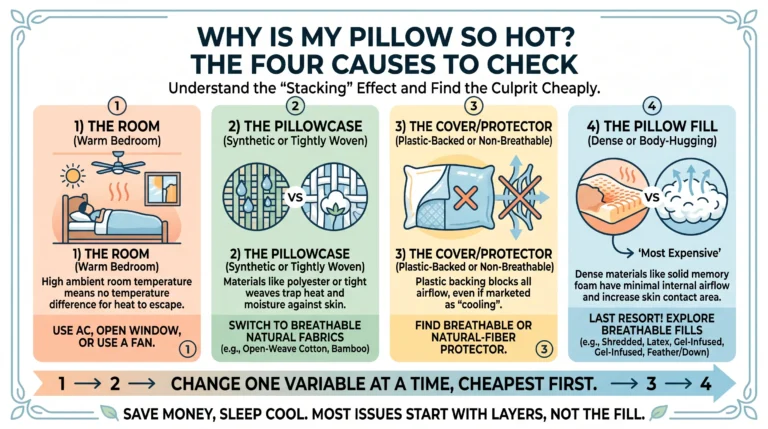
- Breathable layers. Cotton or linen pillowcases let moisture move away more easily than some synthetic fabrics. A washable protector under the case takes up some moisture before it reaches the pillow.
- The pillow itself. Some fills, especially dense foams, hold heat more than others. That does not mean you need a new pillow, but it is one variable in the mix.
Regular sweat soaking into a pillow is also the main reason pillows turn yellow over time, which we explain in why pillows turn yellow.
If it is drool
A small damp patch by your mouth now and then is common. Sleeping on your side or front makes it more likely simply because of gravity and an open mouth. A blocked nose from a cold or allergies can make it worse by pushing you to breathe through your mouth.
There is no pillow fix for drool beyond changing the case more often, and keeping the pillow itself protected. If it is heavy, new, or comes with other symptoms, the doctor or dentist line above applies.
The part people forget: drying the pillow out
Whatever the cause, a pillow that is damp every morning and never fully dries is a pillow that is gradually collecting moisture. The EPA's guide puts it plainly: "The key to mold control is moisture control." It also advises drying water-damaged items "within 24-48 hours to prevent mold growth." That line is written for flooded homes, not bedding, but the principle carries over: moisture that sits for days gives mold time.
Simple habits help the pillow dry each day:
- Leave the bed unmade for a while in the morning. Pull the covers back so the pillow and sheets can air before you tuck everything in.
- Take the pillow out of its case now and then and let it air in a dry, ventilated spot.
- Wash and dry it properly on the schedule its care label allows. Our pillow care guide covers how often, and how to dry pillows without ruining the fill explains how to get the core dry, not just the surface.
- Watch for signs of mold. A musty smell that keeps coming back, or dark or colored spots on the pillow under the case, mean the moisture has gone too far. At that point the pillow usually needs replacing rather than rescuing.
FAQ
Why is my pillow wet when I wake up?
Usually sweat, drool, a humid room, or condensation from a cold wall or window. A patch by your mouth points to drool; a broadly damp pillow plus damp sheets points to sweat; a pillow that is damp even when unused points to the room.
Is it normal to sweat on your pillow at night?
The NHS says sweating at night is normal if the room or bedding is making you too hot. It advises seeing a GP if night sweats happen regularly and wake you or worry you, come with a high temperature, cough or diarrhoea, or come with unexplained weight loss.
Can a humid bedroom make a pillow damp?
Yes. In humid air, fabric and fill take up moisture and sweat dries more slowly. The EPA recommends keeping indoor humidity below 60 percent, ideally between 30 and 50 percent. A hygrometer shows where your room sits.
Can a damp pillow grow mold?
It can if it stays damp. The EPA says moisture control is the key to mold control. Airing the bed in the morning, drying washed pillows all the way through, and keeping room humidity in check all reduce the risk.
Should I replace a pillow that is always damp?
Not necessarily. Fix the source first. Replace it if it smells musty after a full wash and dry, or if you see mold spots on the pillow itself.
A damp pillow is a small daily clue about your room, your bedding or your body. Most of the time it points to heat or humidity, both of which are easy to change. If it points to drenching night sweats or other symptoms, that clue belongs with a doctor.