Drying Pillows in the Sun: What It Really Does
Sun exposure genuinely helps a pillow in two ways: it speeds up moisture evaporation, which matters for a pillow that's damp or slightly musty, and ultraviolet light has a mild bleaching and odor-reducing effect on fabric. It does not replace washing, and it will not lift a set-in stain. It also carries a real cost with repeated use: UV degrades fabric fibers over time, can fade colored covers, and heat-sensitive fills like memory foam and latex should not be left in direct sun for long. Use it as an occasional freshening step, not a cleaning method. It's one small piece of a larger routine; the full pillow care system by fill type is in Pillow Care 101.
What sunlight actually does to a pillow
Two separate things happen when a pillow sits in direct sun: heat and airflow speed up evaporation of any moisture in the fill, and ultraviolet light acts on the fabric and the surface of the fill itself. Those are the whole mechanism. Sunlight doesn't clean a pillow the way a wash cycle does; it doesn't remove sweat, oils, dust mites or set stains from inside the fill. What it does do, honestly, is help a slightly damp or musty pillow finish drying and shed some surface odor, using nothing but heat and light instead of a machine.
Why people recommend it: moisture and odor
The moisture-evaporation effect is the real, useful part of the advice. A pillow that's slightly damp, whether from humidity, a quick spot-clean, or incomplete drying after a wash, dries faster in direct sun and open air than it would sitting in a closed room. Faster, more complete drying matters directly for odor, because trapped moisture is what allows mildew and bacterial growth to develop inside a pillow in the first place. Getting a pillow properly dry, whatever the method, removes the conditions that odor needs to take hold.
Sunlight also has a mild effect on odor-causing microbial activity on the surface of the fabric, on top of the evaporation effect. This is a real, if modest, benefit, and it's the honest reason the "put it in the sun" tip persists: for a slightly musty pillow, it can genuinely help.
The mild whitening effect, and why it is not a substitute for washing
Ultraviolet light has a mild bleaching effect on fabric, which is why sun-dried whites look brighter over time. Applied to a pillow, this can take a slight edge off surface dullness or very light discoloration. It is not a cleaning method, and it will not remove a set-in yellow stain, a sweat mark, or ground-in residue. Those need an actual wash, and in the case of a stubborn yellow stain, a targeted treatment; Why Do Pillows Turn Yellow in the First Place? covers the cause, and How to Whiten Pillows Without Bleach covers removal methods that actually address a stain that's already set.
Treating sun exposure as a substitute for washing is the most common way this tip gets misused: it can make a clean pillow look and smell a little fresher between washes, but it will not stand in for the wash itself.
The real risk: UV degradation and yellowing certain fills can suffer
Every checked source treats sun-drying as essentially free and harmless, and that isn't accurate. Repeated or prolonged UV exposure degrades fabric fibers over time, the same process that fades outdoor furniture and curtains left in direct light. A pillow sunned occasionally for an hour or two won't show this, but a pillow left in direct sun regularly, or for extended stretches, will show wear in the fabric faster than one that isn't.
Colored pillow covers can fade under repeated UV exposure the same way any dyed fabric does in direct sun. And counterintuitively, some fills that are already prone to yellowing can discolor further rather than whiten under heat and light, rather than improving; this is fill-dependent and not something one rule covers for every material. The honest read is that sun exposure is a trade: a real, modest benefit for moisture and odor, against a real, cumulative cost to fabric and color if it's done often or for too long.
Which pillows tolerate sun exposure, and which do not (by fill)
| Fill type | Sun exposure | Why |
|---|---|---|
| Down / feather | Tolerates brief exposure; avoid extended sessions | Natural oils in feather can dry out under prolonged heat, reducing softness |
| Fiberfill / polyester | Tolerates sun exposure reasonably well | Synthetic fiber is generally more heat-stable than natural fill |
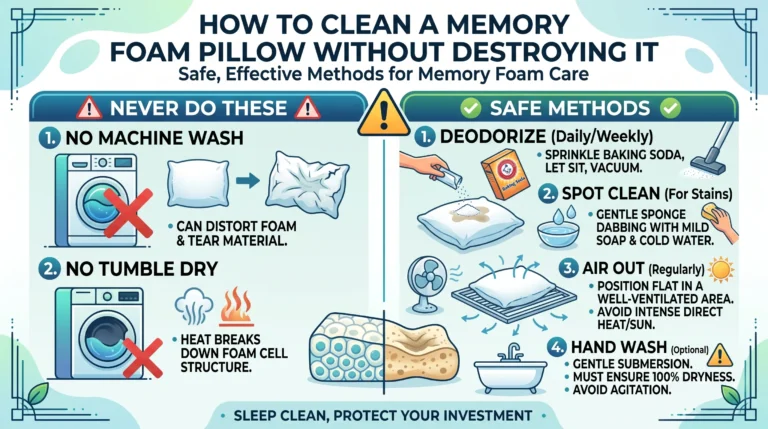
| Memory foam | Avoid direct sun for extended periods | Heat can soften or degrade foam structure; foam pillows also can't be fluffed by tumbling, so sun is one of the only air-dry options and needs care |
| Latex | Avoid direct sun for extended periods | Heat-sensitive; prolonged heat exposure can affect the material over time |
| Buckwheat | Casing can be sunned; hulls handled separately | Hulls should not sit in direct heat for long periods |
The pillow's own care label is the authority on this for your specific pillow, since formulations vary between manufacturers even within the same fill category. This is also the pillow that most needs sun as an air-dry option in the first place, since it can't be tumble-fluffed; How to Clean a Memory Foam Pillow Without Destroying It covers the safe wash and dry process end to end.
How to sun a pillow without damaging it
Keep exposure occasional rather than routine, and keep sessions reasonably short rather than leaving a pillow out for an entire day. Place the pillow somewhere it gets direct light and airflow, and flip it partway through so both sides get even exposure rather than one side taking all the UV and heat. For down, feather, memory foam and latex specifically, treat sun exposure as a brief freshening step, not an all-day drying method, given the fabric and material risks above. Bring pillows in before evening rather than leaving them out overnight, since overnight dew can add moisture right back after the sun already removed it.
When sun exposure is not the answer
Sun exposure is a freshening step, not a fix for anything beyond mild dampness or light surface odor. A pillow that's actually soiled needs an actual wash; How to Wash Pillows in a Washing Machine covers the machine-safe procedure by fill type. A pillow with a visible yellow stain needs the targeted removal steps in How to Whiten Pillows Without Bleach, not repeated sun sessions hoping the stain fades on its own. And a pillow that's musty specifically because it wasn't dried properly after washing needs to be dried correctly, covered in How to Dry Pillows Without Ruining the Fill, rather than relying on sun exposure to finish a job the dryer or air-dry process should have completed.
FAQ
How long should I leave a pillow in the sun?
There's no single correct duration, and it depends on the fill and the specific conditions. The safer approach is a shorter, occasional session rather than an extended one, since prolonged exposure is where the fabric and heat risks appear. Check the pillow's care label for any specific guidance for your material.
Does sun exposure kill dust mites or germs in a pillow?
Sunlight has some effect on surface microbial activity, but it only reaches what it can directly hit. It doesn't reach deep into the fill, so it isn't a substitute for washing when hygiene, allergens or dust mites are the actual concern.
Can I sun a memory foam or latex pillow to dry it after cleaning?
Briefly, yes, since both are air-dry only and can't go in a dryer. Keep the sessions short and avoid leaving either material in direct sun for extended periods, since prolonged heat is a real risk for both.
Will sunning my pillow remove the yellow stains?
Not reliably. Sunlight has a mild bleaching effect on fabric, which can take a slight edge off very light discoloration, but it will not remove a stain that has actually set in. How to Whiten Pillows Without Bleach covers treatments built for that.
Is it bad to sun a pillow too often?
Yes, if it becomes routine and prolonged. Repeated or extended UV exposure degrades fabric fibers over time and can fade colored covers. Occasional, shorter sessions avoid most of that risk while still getting the moisture and odor benefit.